Showing posts with label saudi arabia. Show all posts

Thursday, June 30, 2011

...and it's not even friday!

Big things going on the last few days.

Egypt – major clashes between protesters and police again – hundreds or even thousands injured. Some have blamed former Mubarak insiders for provoking the incidents, but the anger has been hovering under the surface for weeks. The families of the 800+ people killed by the police during the Tahrir square protests have seen no justice - neither the police, the state secret police, nor the regime thugs and baltagi have been made answerable for their murderous brutality. The patience of a people who know their own power is running out. 

On a related note, the prosecution of the police responsible for the 2010 death of Kahled Said (one of the triggers of the Arab spring in Egypt), has been delayed until the end of this summer. In this case, however, the delay may be a good thing. The police under investigation were being charged with excessive force and illegal arrest, but the family of Kahled Said was able to introduce a second, independent, autopsy report as evidence, which may allow the charge of homicide to be added to the charges against the poilice – a much more serious charge that carries much stronger sentencing guidelines.

Lebanon – The Special Tribunal for Lebanon (STL) has finally released its first indictments in their investigation of the assassination of Prime Minister Rafik Hariri. Arrest warrants against four Lebanese hezbollah members. Were issued and the Lebanese government has 30 days to serve the warrants. The prime minister has been a bit cagey about how far this will go, and many Hezbollah supporters are dismissing the whole thing as a us/Zionist plot to destabilize Lebanon. The individuals named are regarded as most directly connected to the actual carrying out of the act, while two more sets of indictments will be coming out later this year. It seems that the STL is going to work its way up the chain of authority, so the plotters and backers of the assassination won’t be targeted until the fall.

For extensive coverage and background on this check out the coverage here: http://qifanabki.com/2011/06/30/stl-indicts-four-suspects-in-hariri-murder/

Syria – Protests have hit Aleppo. This is a big deal – Aleppo is the industrial center of Syria and Assad's government cannot afford to turn the city’s residents against them.

Bahrain – Saudi Arabia started pulling troops out of Bahraintwo days ago and the Bahraini King gave a nice speech about justice yesterday and then turned his thugs loose on the protesters. Protesters were agressively dispersed by riot police using teargas and stun grenades indiscriminately. Check out https://twitter.com/#!/angryarabiya for updates.

In other news, police in Saudi Arabia arrested five woman drivers yesterday.

It figures. In Egypt and Bahrain protesters face clubs, rubber bullets, and tear gas. In Libya and Syria protesters face tanks and life ammunition. In Saudi Arabia you protest by taking your BMW for a spin around the block. Ah well. Baby steps.

Tuesday, May 31, 2011

How good were my weekend predictions?

I was occupied with other things this past weekend, so on Wednesday night I posted a few predictions about what the weekend might have in store. Let's look at how I did:

***

Yemen - "Saleh is out by Monday or a full-fledged civil way will be underway"

Correct.

I know I hedged my bets with two possible outcomes, but between Al-Qaida in the Arabian Peninsula taking over a town in south yemen, the entire Hashed tribe taking up arms against Saleh’s troops, Yemeni air force jet fighters doing air strikes on the Al-Qaida holdings and the Yemeni military attacking protesters elsewhere, I'd say this looks a lot like a civil war.

Interestingly enough, the opposition has insisted that they will continue to fight Al-Qaeda after Saleh is removed (and will even make a deal with the US to that effect). One of the reasons why the US has been tentative in its actions regarding Saleh is because he has actively participated in the US-led war on terror, particularly against AQAP. If the opposition can convince the State Dept that they are sincere in this offer it won't just peel the last vestiges of American support away from Saleh, it will actually earn the opposition some support (and probably some reconstruction funds from the US as well).

***

Syria - "High profile military defections and major violence on Friday"

Relatively accurate (but pretty vague too).

There have been several defections, but nothing high profile. As far as major violence, the horrific torture, murder, and mutilation of 13 year old Hamza Ali al-Khateeb by Syrian state security has spurred larger and angrier protests. Syrians are beginning to take up arms against the military which means we may see something more akin to Libya unfolding over the next week.

Here's the facebook page - We are all Hamza Ali al-Khateeb

***

Israe/Palestine - "Israeli Military strikes on Gaza within 24 hours of the permanent Rafah/Egypt border opening. Protesters get shot somewhere. Rockets from Gaza fail to hit anything."

I was off on all three points. This was a pretty pessimistic prediction on my part, and I’m happy to be wrong about this.

A few additional points on this topic - there haven’t been any missile attacks on Israel from gaza since the start of unity talks between Hamas and Fateh. This suggests two things -

1. Hamas doesn’t want to risk the talks falling through, so they’re keeping a tight lid on things.
Or
2. The assholes with the rockets are just waiting for the right time.

As far as protest-related violence, the Israeli military is expecting some next week in connection with the anniversary of the 1967 war (AKA the Six-day war).

***

Libya - "Tunisian troops exchange fire with pro-Gaddafi forces along the border. 3-5 more countries recognize the NTC by Monday"

I was wrong on both counts, probably because other things are finally moving forward. Lots of big stuff is finally happening, I’ll have a new libya-specific blogpost up on Tuesday to bring you up to speed.

***

Iran - "Ahmadinejad holds on to his authority for another week...barely."

Yea. His time seems to be rapidly running out, but he’s a pretty good at navigating the byzantine convolutions of the Iranian power game. After a week of bad news, Iran's supreme leader finally seems to be taking some of the pressure off of President Ahmadinejad.  If the President has convincingly been brought to heel he still has some life in him, but Khameni may just be setting him up for a bigger takedown.

***

Pakistan - "Three more major domestic terrorist attacks by Monday"

Another one where I’m happy to be wrong. There was only one attack.

***

Saudi Arabia - "More women driving in protest this weekend."

Nope. Just wishful thinking on my part. They formed a facebook group and tweeted about driving.

***

USA - "Obama will say/do something that is immediately declared to be the worst thing ever by several Republican Congressmen and Fox news."

He chewed gum in public. Truly he is history's greatest monster. 

***

Bahrain - "Nothing. No one will do anything to support the Bahraini people. Why? Because people suck sometimes."

Pretty much spot on, but the US has recalled a Human Rights diplomat from Bahrain due to a string of violent threats against him.

***

So. There you have it. Not a great showing, but not a terrible one either.

Look for a post on Libya later today...

Wednesday, May 25, 2011

Weekend predictions

I don't usually go for predictions, but I'll be out of town this weekend, so instead of trying to liveblog from my brother's wedding I'll just do some predictions now and see how I did on Monday.

Yemen - Saleh is done. My guess is he'll be gone by Monday (or there will be a full-fledged civil way underway).

Syria - High profile military defections and major violence on Friday..

Israe/Palestine - Israeli Military strikes on Gaza within 24 hours of the permanent Rafah/Egypt border opening. Protesters get shot somewhere. Rockets from Gaza fail to hit anything.

Libya - Tunisian troops exchange fire with pro-Gaddafi forces along the border. 3-5 more countries recognize the NTC by Monday.

Iran - Ahmadinejad holds on to his authority for another week...barely.

Pakistan - three more major domestic terrorist attacks by Monday.

Saudi Arabia - more women driving in protest this weekend.

US - Obama will say/do something that is immediately declared to be the worst thing ever by several Republican Congressmen and Fox news.

Bahrain - Nothing. No one will do anything to support the Bahraini people. Why? Because people suck sometimes.

Tuesday, May 24, 2011

Iran vs. Saudi Arabia

There is a war going on in the Middle East.

Yea, shocking, I know.

But it’s not the one you’re thinking of. No, not that one either. No not that one.

The big struggle in the Middle East is between Iran and Saudi Arabia.

And Saudi Arabia is winning.

The conflicts in Bahrain and Syria are genuine expressions of popular rebellion and reflect a sincere desire for dignity and freedom, but external powers are trying to twist them into sectarian struggles that fall along Sunni/Shi’a lines as part of a larger power struggle between Iran and Saudi Arabia

If Assad falls – (more a matter of when, actually) - Iran loses their strongest ally in the Arabian Peninsula. Alternately, if the Bahraini royal family were to lose their monopoly on political authority it would put an unpredictable neighbor in Saudi Arabia’s back yard (which is already untenable by benefit of Iraq’s continuing instability, and is becoming more so thanks to Yemen’s ongoing collapse).

The Saudis have been trying to peel assad away from the Iranians for years using their favorite tool – cash. They’ve been ramping up their investments in Syria for quite some time and they’ve been careful not to denounce Assad during the past few months of protests, despite the degree to which the collapse of his regime would favor Saudi Arabia (Having a weak and threatened Assad-led Syria align with Saudi Arabia would be even better for the Saudis than a Syria with no Assad)

The good news here is that no matter what happens, Hezbollah will probably come out on the bottom. (unless, of course, the potential loss of power spurs them to ambitious military action in Lebanon, in which case we will likely see a resumption of the Lebanese civil war)

Regardless, a major power shift in Syria will cause serious problems for Iran, and right now Iran – or at least the Iranian government - is tearing itself apart. This might sound like good news, but the removal of Ahmadinjad’s power base won't make the government less conservative, it'll just make them conservative in a different way. In the long run this may be good for the reformers (if the process of weeding out Ahmadinejad's loyalists leaves the pro-Kameni religious hard-liners with a less than stable base) but frankly, when this sort of thing starts to go down it impacts everyone that’s not in the winner’s tent – the Mensheviks didn’t get a pass just because Stalin was purging the Trotskites.

That said, Saudi Arabia is a serious and much more real problem for America than Iran. This has been the case for years, but due to a variety of public policy issues, no one in the state department can say this publicly. Not only can they cripple the US economy with little more than the twist of an oil pump, they spend millions of dollars in dozens of countries to propagate their hyper-fundamentalist Wahabist brand of Salfi Islam. (I’ve got a post on Salafism coming up soon) Worst of all, however, is Saudi Arabia's ongoing sponsorship of violent extremist groups throughout the muslim world, something that they are notorious for (and on a scale far greater than anything Iran has ever aspired to)

http://www.fas.org/sgp/crs/terror/RL32499.pdf

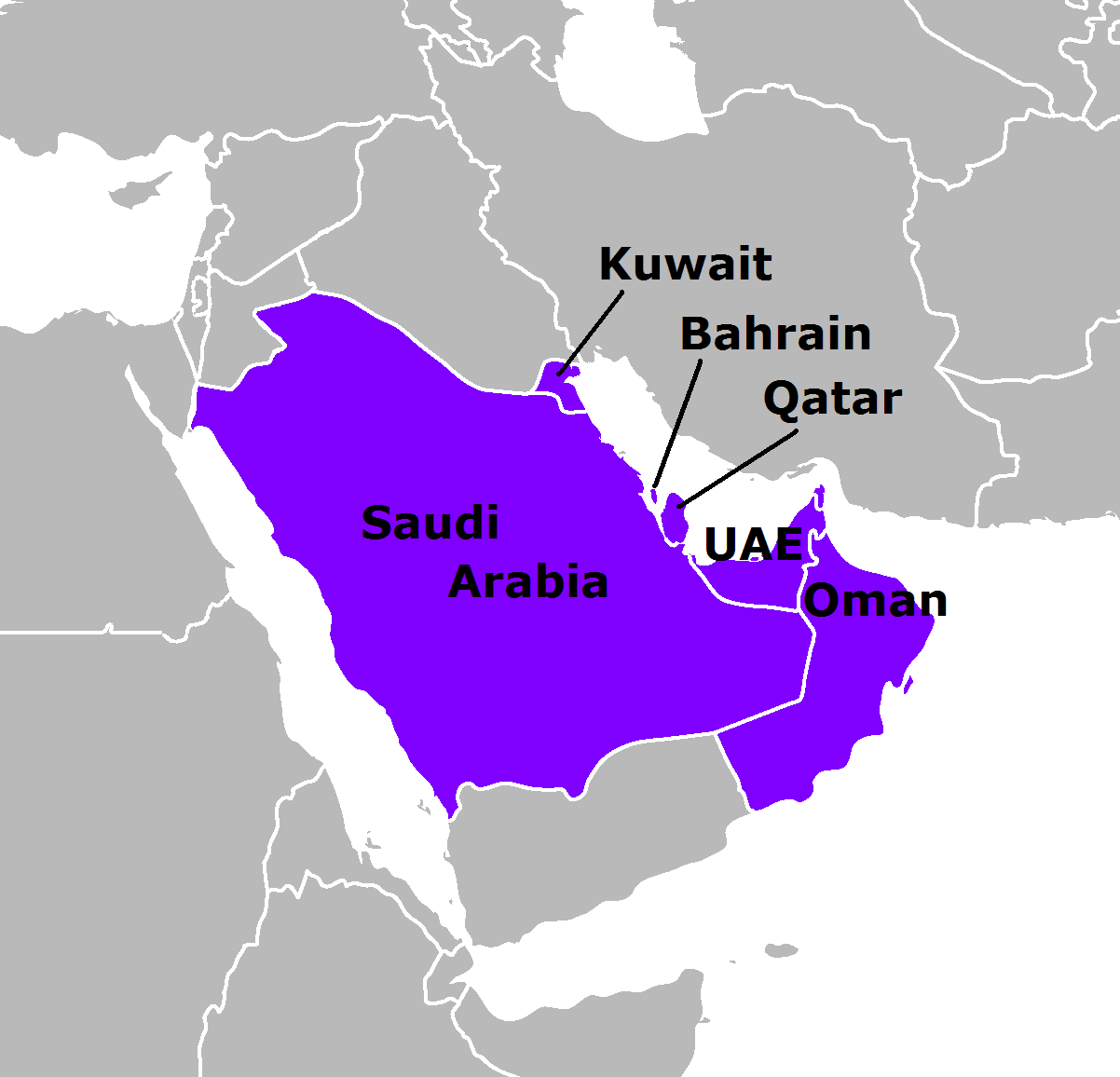
Saudi Arabia and their UAE lapdogs want the Middle East revolutions to end post-haste, and they’ll do whatever needs to be done to stop the spread of anything even vaguely resembling democracy. As part of this effort they’ve invited Morocco and Jordan to join the Gulf Cooperation Council (GCC ) which currently includes Saudi Arabia, Oman, Kuwait, Bahrain, and Qatar.

Why would two countries that don’t border the Persian Gulf be invited to join a gulf focused organization? Because Saudi Arabia is trying to form a bloc of states that will support each other in the face of domestic unrest. (they could change their name from the GCC to "The Nondemocratic Arabic-speaking Monarchies of the Eastern Hemisphere", but it doesn’t have the same ring to it)

At this point the die has not yet been cast.

Meanwhile, the maverick in the GCC is Qatar, who seems far more invested in social change than their fellow members. Qatar is still pumped from the goodwill of the Arab street (thanks to the fact that they host Al Jazeera, an integral component of the arab spring). Additionally, they’re bursting at the seams with cash from high oil prices (and the less money you have to spend bribing and repressing your own citizens, the more you have to spend on other things) has decided that “up with people” is their watchword (though it’s a bit muffled when it comes to Bahrain).

Kuwait also seems to be trying to project a pro-proletarian image, pushing for global health initiatives. Clearer evidence of Kuwait’s reticence to toe the Saudi line can be seen in their recent diplomatic resolution with Iran (though this is causing some problems in the Kuwati establishment) Kuwait, however has its own problem, and some strange power plays are underway right now...

Even Saudi Arabia may be developing a bit of a problem, however.

Friday, May 20, 2011

Some quick thoughts on Obama’s speech.

Nice speech. Thoughtful and nuanced, which means it’ll be slagged by everyone who didn’t hear exactly what they wanted to hear.

The two biggest complaints that I’ve heard in response to the speech are the absence of any mention of Saudi Arabia and the issue of the ’67 Israel/Palestine borders.

Frankly, I thought that Saudi Arabia’s name was pretty clearly written between the lines of most of Obama’s comments on Bahrain and many of his other comments (and the Saudis certainly heard it).

The problem is that Saudi Arabia is currently helping us out in Yemen (a prospect that I have very little faith in, but one where our options are extremely limited). Given that Yemen is the Afghanistan of the Arabic speaking world, right now would not be a good time for Saudi Arabia to become the Pakistan of the Arabic speaking world.  (Okay so it’s a terrible analogy, and anyway, Saudi Arabia is already the Pakistan of the Arabic speaking world).

Regardless, Saudi Arabia got the message.  The fact that Obama’s speech pissed them off is evidence enough that they knew exactly what he meant.

(sidenote -  I almost wish that Saudi arabia’s army would just straight up invade and occupy Yemen for a few years so they could be on the receiving end of what American troops have been handling for the last 8-10 years in Iraq and Afghanistan).

As far as Obama’s comment about Israel’s 67 borders,  I’ll just repeat what Middle East Journal editor Michael Dunn said on this issue:

Using the 67 borders as a basis for negotiation is nothing new, and the people who reacted the most strongly to Obama’s statement were those who had the most to gain from making Obama look bad in the eyes of Israel’s American supporters.

And that’s what Obama said. He said that the '67 lines should be where the negotiations should start.

And that was his central point.

Negotiations have to start.

I understand that Hamas is a terrorist organization. They’re also blatantly corrupt and hopelessly ideological in their day-to-day operations.  The Palestinian people know this.  In fact, the only reason why the prospect of a Palestinian unity government is in the works is because Hamas and Fateh both know that their legitimacy as representatives of the Palestinian people is deeply in danger.  Personally, I suspect that Fatah is doing it because they know that it’ll screw over Hamas more than themselves in the long run, and Hamas is committed because they know their time in the driver’s seat will end with the next Palestinian election, and they need to make sure they are poised to preserve some small modicum of power.

But here’s the thing about the speech: 

If Obama says something his critics disagree with they can wail about his naïveté, or fundamental wrongness. If he happens to say something they agree with, they can dismiss it by just saying, “it’s just a speech, actually carrying it out is something entirely different”

If Obama moves to support the anti-government protesters in the Middle East, his critics can say, “He’s selling out our longtime allies/partners!”

If he doesn’t move quickly enough, they can say “He only sided with the forces of freedom and democracy when he had no other choice!”

The truth is simple, we are in uncharted territory.

When the Soviet Union collapsed it resulted in the restoration of individual statehood to a multitude of entities that had previously been bound to a single institutional core.  In the case of the Arab Spring we are watching dozens of individual countries transform themselves into something they’ve never been before.

Frankly, this is the biggest challenge did any president has had to face since Roosevelt (FDR, not Teddy).   
The scope and scale of we are watching is literally unprecedented.

Say what you will, but for me (as someone who spends an inordinate amount of time attending to the cultures and politics in the Middle East and North Africa) I can say without reservation that although I don’t agree with every policy action that Barack Obama has made in response to the Arab Spring I’m glad he’s the man making those decisions.  I don’t think anyone else that was in the 2008 US presidential runnings would have handled it as well.

It should come as no surprise to those of you who have been reading this blog with any degree of regularity that I tend to be favorably inclined towards the US State Department's strategy in the various Middle East and North African countries.  As much as rapid reactions might be appealing, there is no one-size-fits-all solution to the events on the ground, and every single country has its own unique challenges.  Although I tend to be fairly optimistic about the long-term outcome of the Arab spring, there is still a tremendous amount of uncertainty and danger inherent to the situation.

This raises an important point, and one that is easy to lose track of in the overwhelming onslaught of instantaneous news updates and widespread upheaval: we are witnessing a transformation that is unprecedented.  We must not let our impatience inure us to the magnitude of what is happening.

This although the seeds were sown long before Mohammed Boazzizi set himself on fire or Khaled Said was beaten to death by the Egyptian police, those events are only months old.

As we watch the daily and weekly reports for more than a dozen past and passing dictatorships it is easy for us to yield to impatience, and wonder “what’s taking so long?”

Remember this – today was only day 95 of the Libyan revolution.

The Egyptian revolution is only four months old.

The Bosnian war of independence took three years. The Croatian war of independence took four years.

Who knows where we’ll be in a month, much less a year.

Thursday, April 21, 2011

Ynetnews editorial - Ignorance or Ideology?

Bad ideas...

As I’ve said before, I’m a generalist when it comes to the Middle East. There are some areas that I know better than others, but there’s no one aspect or region that I can point to as a singular area of expertise. My primary interest is synthesis – making sense of broad aggregates of data on a variety of topics. This means that I will sometimes come to rather different conclusions than those reached by people with a narrower but deeper view of specific area.

Case in point - this FP piece on the Syrian uprising. The author reads it as much less of a genuine people’s movement at work, and instead sees the fingerprints of the MB and other insurgent militant elements all over it. Frankly, I think some of what she’s seeing is what she wants to see, and much of her interpretation doesn’t jibe with what I’ve been following online, but her conclusions are not unreasonable, and she certainly has some windows into the situation that I don’t have.

So I read the article, make some mental notes, maybe follow up on a few things, and continue about my day.

Sometimes, however, I read material that is so shockingly idiotic that it gnaws at me for days. Not the casual ignorance of a YouTube “comments” section, or the absurd conjecture of buffoons like Joseph Farah at World Net Daily – I can laugh at things like that, shake my head, and move on.

No, I’m referring to material like the following Ynetnews.com editorial, which reveals a staggering degree of willful ignorance and ideological blindness by someone who should know better.

Almost every single paragraph of this article contains either a gross distortion of fact or a deliberate dismissal of truth (often both). Crass propaganda from top to bottom.

I’m not going to do a point-by-point rebuttal, but I want to point out a few specific things

Israel’s leadership is more loyal to its Arab allies than President Obama. While Israel stood by Mubarak, it took Obama three days to call for Egypt’s president, a long term US friend, to leave office and to threaten him with foreign aid cuts. It seems that Obama only confronts and abandons allies, but prefers not to meddle in the internal revolts of enemies like Syria and Iran.

She says this like it’s something to be proud of. Israel supported brutal regimes in Argentina and South Africa long after almost every other country in the world had turned against them. Why would this be a positive argument for stronger ties to Saudi Arabia?

Not only that, the US state department was meddling in the internal revolts in Syria and Iran since before they were revolts. Israel often boasts of being the only democracy in the region (a statement whose veracity is contingent on some semantic juggling) and yet the author is advocating allying with the least democratic country in the region to strike against one of the countries that is closest to internal revolution. When Saddam Hussein attacked Iran in the 1980’s he gave the unstable fledgling Islamic Iranian Republic an external foe to unify against, strengthening their national identity, and legitimizing Ayatollah Khomeini’s position as the undisputed leader of the Iranian people. Cooperative action by Israel and Saudi Arabia against Iran would give their currently unstable regime a means to reunify and would undo years of internal and external work towards Iranian regime change.

Third, Iran is the main danger to Saudi Arabia and Persian Gulf states, not Israel, as the WikiLeaks cables revealed, with Saudi King Abdullah repeatedly imploring Washington to “cut off the head of the snake” (Iran) while there was still time.
Iran is certainly a danger to Saudi Arabia, primarily to the Saudis’ chokehold on the region through wealth and wealth-based influence. The conflict between Iran and Saudi Arabia, currently being fought through proxies around the M.E. (Particularly in Bahrain, Syria, Yemen, and Iraq) is ultimately about two things – commerce and legitimacy. The Saudis have gotten to where they are through careful negotiation, leverage, coercion and intimidation, but ultimately, they are where they are because they have more oil than everyone else. Their regional religious dominance comes from successful negotiation for authority over the holy cities of Mecca and Medina after the fall of the Ottoman Empire and then spending vast quantities of money to propagate their extremist brand of fundamentalist Islam to the rest of the Muslim world.
Fifth, establishing a Palestinian state is not in the best interest of Saudi Arabia or Israel. As previously happened after Israel withdrew its military forces from Gaza in 2005, Hamas will be able to take over the new state by winning subsequent Palestinian elections, as it did in 2006, or by militarily defeating the PA, as it did in 2007. Such state would become another Iranian base, threatening Israel but also destabilizing Jordan next door and encircling the Saudis from the northwest.

This is just fear-mongering that is rooted in ignorance, denial, or outright deception. An established Palestinian state would be terrible news for Hamas (and for Fateh), an issue I’ve addressed before and one that I’ll probably address again soon.

The essential problem with this piece is that it was written by someone who has confused presenting a convincing-sounding argument with being factually correct – the technical term for this is “Lawyer”.

Thursday, April 7, 2011

Bringing you up to speed...

Sorry for the rather substantial drop in output on my part. In the absence of any reasonable excuses, I’ll blame twitter. (You have been following my twitter feed, right?)

Well, there’s a lot to cover, so let’s get to it…

Libya still leads in the news, and at this point it seems as though the only thing holding the Libyan government together is utter terror. In addition to the defection Moussa Koussa on Sunday, another high profile defector got out of the country two days ago. As the article mentions, we aren’t seeing more defections because anyone who leaves the country without their family is endangering their lives.

The most substantial change In Libya has been General Abdel-Fattah Younis’ return to a military leadership role for the Liberation forces. Younis, a former Libyan Interior Minister, was one of the early high-profile defections from the pro-Ghaddafi camp. He initially assumed a leadership position, commanding a brigade of other Libyan army defectors. This created some conflict among the rebel forces, many of whom questioned his fitness for command (given his long career as a Libyan government insider). Additionally, the rapid initial success of the rebels had bolstered their confidence in their own ability to overcome Gaddafi’s military, and they wanted to preserve the spontaneous nature of the uprising, rather than rely on military assistance (this is also why they initially opposed the idea of a no-fly zone).

General Younis stepped back from his leadership role, and the anti-Gaddafi military forces took a backseat in the fighting until the rebels began to lose in a spectacular fashion a few weeks ago. Even with the advent of the NATO no-fly zone/civilian protection order, there seems to have been continuing debate over the military’s role in the revolution. It was only a few days ago that Younis was restored to his leadership role, something that probably should have happened some time ago.

With Younis in command, the rebels on the front lines (recklessly courageous, but under-equipped, untrained, and unguided) have been supplemented and/or replaced by actual soldiers. Facing stronger opposition, Gaddafi’s forces have redirected some of their attention to the small undefended southern towns that are opposing him but have not yet been integrated into the resistance.

As the Libyan conflict has unfolded, it has caused some major strategic realignment in both Africa and the Middle East. This can be seen in the recent actions of Algeria, Turkey, Jordan, and Qatar.

Algeria has been serving as a main conduit for the arms and mercenaries flowing towards Ghaddafi, a fact that will probably soon bite Algerian president Boutiflaka's regime in the ass. Like Libya, (and unlike Tunisia and Egypt) Algeria’s military serves as an enforcement wing of the ruling party, and Ghaddafi’s failure to stop the Libyan uprising with brute force means that Algeria may have a similar fate in store for them. Not only that, their actions in support of Ghaddafi will not likely be forgotten in a post-Gaddafi state.

Turkey’s role in the Libyan situation has been deeply ambivalent, which has created a great deal of frustration towards turkey on the part of many Libyans. Although they initially opposed intervention, they followed that by assuming a prominent role in NATO’s actions in the Med. They have tried to position themselves as potential interlocutors between Qaddafi and the rest of the world, while decrying his brutality but they don't seem to have been successful with either side of the conflict.

Jordan, on the other hand, has conclusively settled itself on the side of the Anti-Ghaddafi forces by becoming the third Arab country to contribute planes to the NFZ/civilian protection action. This may be a move by the King to strengthen his support among his base. Jordan is fairly unique, demographically - close to 2/3 of its population is ethnically Palestinian, which creates a very odd power dynamic. (Anyone who says that Palestinians are really Jordanians is slinging BS or playing semantic games). For a better understanding of the Jordanian situation (and why there won’t be a revolution in Jordan any time soon) I highly recommend this blog post. King Hussein of Jordan is a sharp guy, and the advantages of having good relations with the emerging new Libyan state are pretty clear.

Qatar, more than any other Arab nation, has recognized the opportunities that a new Libya represents. Their enthusiasm for the NFZ/civilian protection action was evident from the start. I get the impression that the Qatari government sees the future of the Arab world more clearly than any of their neighbors, and has been taking bold steps to ensure their place in it, despite their small size and limited oil resources. Towards this end, they have already signed agreements with the provisional government in Benghazi to purchase a tanker full of oil. (Note – most Libyan oil is what they call “Light Sweet Crude” - extremely high-grade oil that requires less refinement and purification than most other types of crude oil.)

All of these Libya-centered power struggles can be seen as expressions of a larger struggle – the push for stronger standing on the international stage and in the Gulf Cooperation Council (GCC).

Saudi Arabia is probably the strongest player in the GCC, given their close ties to every US administration since Nixon and their staggering oil wealth. For the past 30+ years Saudi Arabia has been furthering its interests in a number of ways, and one of the most notable is the promulgation of its own distinctive Wahabist brand of Sunni Islam. Wahabism is a particularly conservative strain of Salafism, a strict back-to-basics rigidly fundamentalist form of Islam. Salafism, especially the Wahabist variations, has little tolerance for alternate interpretations of Islam and the Quran, which has created some serious conflicts within the Muslim world – especially with Shi’a and Sufi Muslims.

This is important to note because expressions of the Salafi vs. Sufi conflict have been flaring up in Egypt lately – in particular several Sufi shrines have recently been destroyed by Salafist mobs. Sufis regard the burial places of their saints and teachers as being somewhat sacred and often use them as places of prayer and pilgrimage, a practice that Salafis regard as tantamount to idolatry or even heresy. (Note – don’t confuse the Salafis and the Muslim Brotherhood. The MB represents and includes a much more diverse range of Islamic expression.)

I raise this issue because Saudi Arabia heavily funds their Salafist brethren in Egypt and the increasingly aggressive public actions by Egyptian Salafis carries the imprimatur of Saudi interference. Egypt and Saudi Arabia are not known for cordial relationships with each other, but the recent events are likely to drive even more wedges between the two states and push Egypt towards the other big player in the Gulf – Iran.

The Middle East realignment can also be seen in some notable recent events in Syria (though in some rather counterintuitive ways). Shortly after the protests in Daraa started rapidly escalating the King of Saudi Arabia called Bashir Assad to assure him of Saudi Support. This is strange for a number of reasons, but most particularly because for the past 40+ years Syria has been either loosely or tightly aligned with the Baathist/Nasserist bloc of Arab nationalists (particularly Egypt, Iraq, Syria, and to a lesser extent Libya and Algeria). This group has traditionally been locked in competition with the pan-Islamist royalists, especially Saudi Arabia. Not only that, but Assad, his family, and the rest of the Syrian government are Alawites, a sect of Shi’a Islam (remember what I just said about Salafis/Wahabis and Shi’a?).

One of the commonly heard chants in the streets of Syria last week was "No Iran, no Hezbollah, we want a Muslim who fears God." (it's catchier in Arabic) The accusation that Assad is insufficiently religious seems to have struck a nerve, and Assad seems to be trying to get more support from the religious conservatives in Syria by rolling back some of the social reforms of the past few years. (He’s not rolling back political reforms because there haven’t really been any) It could be that he’s backing away from Iran and towards Saudi Arabia to preserve his power structure. He's also taking big steps to gain the favor of Syria's substantial disenfranchised Kurdish population.

More on Syria's tenuous stability here.

Well…that’s plenty for now. Barring some other major upheaval I’ll be getting around to addressing Iraq and Bahrain this weekend.

Wednesday, March 2, 2011

February was an interesting month, wasn’t it? Wait till you see what's next.

February was an interesting month, wasn’t it?

Mark my words, March will be even more interesting.

***

Egypt and Tunisia still have a long way to go, though Tunisia has finally lifted its state of emergency, and Egypt is fast tracking elections. I’ll try to keep you apprised of those situations as best I can, but it won’t be easy given how much other stuff is coming down the pipeline. Updates are probably going to come in the form of links, rather than summaries.

If you're interested in the current power structure in Egypt, Issandr el Amrani over at the arabist.net has put up a particularly informative post that's worth checking out.

***

Iran – The March 1 protests were notably different than those seen previously, particularly in the degree to which violence has been a factor. Although the Feb14 protesters did suffer a few attacks, and the 2009 protests saw several clashes between the protesters and the police/militia, yesterday there was much more rapid aggression on the part of the police (including deployment of riot squads) and the crowds (which were notably larger than the Feb14 crowds) were quick to counter with violence of their own. A recap of the days events can be found here.

Prominent opposition leaders Moussavi and Karroubi, already under house arrest, may have been recently imprisoned by the Iranian government. The government denies this, however, saying it is only propaganda generated by the MKO. (Not than anyone believes them)

The Iranian government began utilizing an interesting tactic in response to the tech-driven nature of the protests – anyone (particularly youth) walking or driving in the area near where the planned protests planned took place was stopped by police. The police checked their ID and searched their bags/pockets. Anyone with a phone, camera, or laptop was then photographed. This represents a frighteningly smart shift in the government’s efforts to counter the protests, and provides them with a fairly comprehensive database of tech/media savvy youth that may or may not be connected to the protests. The database will doubtlessly be used to identify potential activists for targeted monitoring.

There is good news as well - some unrest among Iranian labor groups has begun to surface. As I said before, the Green Movement has little hope of success if it doesn't gain traction among the trade unions and merchants.

***

Saudi Arabia has done an interesting thing...and by interesting I mean, awful with ominous portent for the future.

Shooting random Saudi facebook protest-organizers is not a good way to tell the world that you are secure in the legitimacy of your mandate to lead.

***

Over in Libya, Qaddafi is holed up in Tripoli with the last of his army, periodically making attacks on nearby cities. This situation has gotten so bad that the supposedly elite Khamis Bragade has been unable to break through the defenses of a civilian uprising.

Looking back at my post from Saturday, it seems that I was less generous than I should have been with regards to how long brother leader’s regime will stand – with close to 90% of the country lost (geographically and demographically) the only thing keeping Qaddafi afloat now is the hard-line loyalists, his mercenaries, and his fanatical self-confidence and delusion.

Regardless, the inevitability of such a thing is virtually inarguable.

Intervention seems to be a faint possibility, but at this point the most important services that our (and by “our” I mean “American”) troops can do is be prepared to deliver services to a country in desperate
need of food and medical supplies.

The possibility of a no-fly zone may be moving closer, but given the relative speed of your average United Nations resolution versus the pace of this particular revolution, it seems unlikely that we will see anything resembling the enforced no-fly zone that that we saw in Iraq during the last few years of the 20th century. Furthermore, it seems that many of the recent reports of air attacks against protesters and anti-government forces are not actually air attacks, but halfhearted overtures of attack, followed by deliberate mis-targeting that harms no one. There has even been at least one reported case of a Libyan pilot deliberately injecting from his plane, deliberately crashing it into an open field rather than fire on Libyan citizens.

Regardless, the longer this conflict continues, the greater the likelihood of intervention.

In terms of Libya’s outlook for the future - it’s anybody’s guess, but some scenarios seem more likely than others.

The two that I have seen cited most often are worlds apart – stable constitutional democracy or fragmentation. (note: both of these scenarios are contingent on the absence of US/UK/UN intervention. If external forces are involved then the dynamic changes rather dramatically.)

Libya does have few advantages over egypt and Tunisia.

1. When this grisly scene finally reaches its conclusion, there won’t be much left of the old guard. Some of the more powerful tribal leaders will certainly win big in an election scenario, but it’ll be pretty difficult for anyone with deep connections to the Libyan regime to retain much power. Libya will be taking their steps towards freedom without the entrenched pwer structures that Egypt and Tunisia are still struggling with.

2. Despite the general failure of the political system invented by Gaddafi and promulgated in his “Green Book”, an important aspect of the “Jamhariyya” is its heavy reliance on direct democracy for local governance. Although the system was severely hampered by the corruption and interference from nepotistic elites, the Libyan people are quite familiar with the democratic process.

3. Lack of diversity – Libya has a strong sense of self identity. This is not to say that Libya is homogeneous, but its religious and ethnic minority populations are quite small - this is also good because it means they are less likely to be seen as a political, cultural, or demographic threat and can more comfortably be integrated into the process of democratization.

However, some inclinations towards chaos are also present, particularly the inter-tribal rivalries that Gaddafi has spent decades exploiting. I am fairly optimistic about the potential for good outcomes but the issue of vendetta and retaliation is very real, and will probably be with us for years if a vehicle resolution is not in place.

This is an issue that many countries face in the aftermath of heavily repressive regimes, and a variety of coping methods have been used by the dazed and damaged populations as they emerge from under the boot of oppression. I’ll try to get a post up in the next few days on how South Africa, Spain and Argentina handled the ghost of their bloody and brutal history – there are important lessons to be learned from all three examples.

***

The most notable “I sure didn’t see that one coming” from the past week is Oman. I know a thing or two about Oman (I did some work for the Sultan Qaboos Cultural Center when I was interning at the Middle East Institute) and the Sultan has a reputation for being progressive and forward thinking, so I was particularly surprised to see that they, too, are not immune from the momentum of the Arab Spring. I’ll be putting up a piece on Oman, Sultan Qaboos, and Ibadi Islam in the next few days - stay tuned.
(In the meantime you can scroll through a piece on Frankincense that I put together for the SQCC five years ago - I think some of it got lost when it was posted online, but it's still a fun little piece)

Friday, February 25, 2011

Libya and the wider situation - Updates

Algeria has finally lifted the state of emergency that has existed since the early ‘90s which means that the government’s authority to use the military will, in theory at least, be curtailed. Given that Bouteflika has been using the military against dissidents for 20 years, it remains to be seen whether ending emergency powers will actually change anything.

“Gaddafi’s gift”, as I called it on Wednesday, may be paying off in Yemen, where after multiple deaths the President actually issued an order for the military to protect the protesters. We’ll see how long it lasts.

The violence against protesters in Bahrain also seems to have paused for the moment, as the various parties gather themselves for the next round of who knows what.


Iran seems grim. The protests aren’t really getting as much traction as they need to, and without the support of the workers unions and the merchants it doesn’t look good for them. Some rather sobering analysis here. An interesting election took place yesterday for the leadership of Iran's chamber of commerce which may play out in some interesting long-term ways as Iranian business leaders continue to flex and grow their power.

Saudi Arabia – After several weeks of surgery and convalescence in Europe and Morocco, King Abdullah returned home and showered his citizens with $37,000,000,000 in gifts/benefits in a move that, frankly, comes across as a cheap way of paying off his citizens to keep them happy. And there’s plenty more money where that came from, particularly given that oil prices are now over $120 a barrel. (On that note, Tom Friedman, whose NYT columns have been pretty hit-or-miss for quite some time, finally had a really good one this week)

Overall, even if countries like Saudi Arabia, Syria, Morocco and Jordan only see minor reforms in the aftermath of Egypt, Tunisia, and Libya, it’s still a positive step forward. Rights, once given, are harder to take away, and every crack in the façade is a step closer to regime collapse.

In Israel there were rocket attacks from Gaza into Be'er Sheva yesterday, which fortunately only damaged a building and didn’t take any lives. As expected, the IDF response was swift and unequivocal. I’ll be putting up a post on Israel in a day or two, so I’m not going to get too deeply into that right now.

The situation in Libya can’t last much longer. A constitutional committee is underway in Benghazi and despite the viciousness of Gaddafi’s actions his troops are rapidly losing ground. His personal Envoy just fled to Egypt to beg for asylum and there are rumors of a split in the Khamees brigade, which (if true) would mean that it’s pretty much over for Brother Leader.

End of the line, G.

(Stay tuned to http://www.libyafeb17.com/ for continual updates)

I’ve had some interesting conversations about US intervention in Libya, and as much as a no-fly zone would be nice, it unfortunately isn’t as simple or easy as it sounds. Some good analysis here and here. As shocking and horrifying as the reports of planes firing on crowds of people is, the vast majority of the killing has been done on the ground with soldiers, mercenaries, tanks, and artillery. To do something really effective would require much more than keeping the government’s planes on the ground, and if this was a more protracted event intervention would probably be a realistic option but it looks to be just about over.

So what can we do? For one, Libya will need tremendous amounts of medical assistance once this ends (they actually need it now, but their #1 priority is to get rid of Gaddafi). I’m in the process of contacting some relief and aid agencies and some Libyans to see if we can coordinate or participate in some assistance activities – I’ll keep you posted.

Monday, February 21, 2011

Another week begins.

What now?

Quite a weekend for me.  Yesterday my page had some 400 hits in a 24-hour period, a pretty dramatic record, considering I was averaging about a hundred hits a day previous to that (though I’ve only been doing this seriously for less than a month).

I’m pretty happy with my coverage of the situation with Libya, given that much of what I was reporting on the 19th is finally making it into the mainstream news.  This raises a point (or two) I’d like to clarify for the sake of my reading audience - I am not a journalist.  In this current situation that is something of an advantage.  The situation on the ground is so chaotic that by the time a single event can be confirmed and verified, the larger situation has already changed dramatically.  In Libya, the news that was three hours old might as well have been news that was a day old, and news that was a day old was still being vetted for accuracy by the international news agencies.

For me to rely on insider commentary, twitter feeds, uploaded YouTube videos, and hastily posted messages and audio files on poorly put together webpages is rather dangerous.

Hyperbole, confusion, mistranslation, panic, misinformation, wishful thinking, personal bias, and deliberate propaganda are all factors that must be taken into consideration when relaying information from the sources.  I am, essentially, flying by the seat of my pants and hoping that my own knowledge and critical thinking capabilities are sufficient to the task at hand.  Only time will tell how right or wrong I’ve been in my assessments (although frankly, I think I’ve been doing pretty well all things considered).

Fortunately, no one’s making policy decisions based on my read on the Middle East (I hope).

Frankly, I don’t think anybody’s making any policy decisions at all at the moment.  Right now, everyone’s in tactical mode rather than strategic mode, and that’s not likely to change until the situation becomes a wee bit less volatile.

Anyway, thanks for reading. By the way, while on the topic, I know that many of you are educated and intelligent people - if you read  something here that strikes you as being  questionable, or flat out wrong, please, please, please feel free to address i.  I’d rather be publicly corrected than publicly wrong.

Now, on to the material at hand:

***

Libya - I really think this is the end of the line for the Libyan regime.  As I mentioned yesterday, al-arrabiyya reported that Qaddafi had left the country for South America (Brazil or Venezuela). Unfortunately, no one else is supporting it, so I can't vouch for its accuracy at this point.

One of Qaddafi's sons, Seif al-Islam, gave an unintentionally hilarious off-the-cuff speech last night (I hope it was off-the-cuff, if those were his prepared remarks then that boy needs help). Several translations can be found, and I highly recommend that you read it in full, it’s full of crazy little gems like,

We all now have arms. At this time drunks are driving tanks in central Benghazi. So we all now have weapons. The powers who want to destroy Libya have weapons. There will be a war & no future. All the firms will leave, we have 500 housing units being built, they won't be completed. Remember my words. 200 billion dollars of projects are now underway, they won't be finished.

or this one:

The army said that some protesters were drunk, others were on hallucinogens or drugs. The army has to defend its weapons. And the people were angry. So there were deaths, but in the end Libyans were killed.
There are thee parts behind this
1- Political Activists whom we agree with,
2- What happened in Bayda are Islamic elements. Bayda is my town, my mother is from there. People called me. They stole weapons and killed soldiers. They want to establish an Islamic Emirate in Bayda. Some people took drugs & were used by these protesters.
3. The third part are these children who took the drugs and were used. These are facts like it or not.

Ayyad elBaghdadi did a real-time translation of the speech on the fly via twitter and at the end of it said, “I feel stupider just for having written it down”.

The level of denial is a full magnitude higher than Mubarak’s was during his final speech, but as funny as the whole thing may be for us abroad, the situation on the ground for Libyans is incredibly grim. As I said before, it is impossible to overstate the bravery of the Libyan people at this point. After the past three days of conflict, everyone in the streets knows that death is a strong likelihood.


Although the general populace, large numbers of the tribally affiliated population, and many members of both the army and the police have joined with the uprising, the Libyan government has three pillars of support:
The Elite military, led by one of Qaddafi’s sons, and heavily staffed with regimes loyalists, these people are not merely fighting at the whim of the leadership, they are likely fighting for their own lives, and as such will not be pulling punches when it comes to combat (this is no longer crowd control, this Is all-out combat)

The Libyan Air Force, which draws heavily from the Qadhadfa (Qaddafi’s own tribe) for its pilots and officers. Family loyalty is essential here as are old tribal rivalries. Unsurprisingly, nepotistic favoritism has been very good to Qaddafi’s tribe, but very problematic for inter-tribal relations. (Short article on this here)    Additionally, it’s a lot easier to kill people from a fighter plane than it is with a machine gun. Bombing of major urban areas has already been reported, and I just don’t know how long it will take to get the situation under control.  If the ground crews to stop supporting sorties, then it could end sooner than later, but I honestly have absolutely no idea what the likelihood of something like that is.

The mercenary forces who have been confirmed in Benghazi and several other places are the third pillar of regime support, and the most unpredictable.  They are reportedly from places like Chad, Bangladesh and (?  Niger), and they don’t stand a chance of survival if captured.  Many of the worst atrocities witnessed in Benghazi and other eastern cities have been attributed to the mercenaries, and they have shown their contempt for the general populace through their ruthless violence.  At this point they probably just want to escape with their lives, and there’s a good chance that many of them won’t.  Well armed, terrified man with few options are capable of truly horrific things.

That being said, I don’t think the government’s resistance is sustainable.  The only question is how much damage will they unleash on the populace before they are taken down? (Check out Dirk Vanderwall’s analysis here) Plus his book is right there on the sidebar ---->

***

Yemen - I’m sorry to say I haven’t had a lot of time to follow Yemen, given the situation in Libya, but a few things should be mentioned: The president has refused to step down.  The violence has been steadily escalating, though not nearly to the same degree as Libya. Good ongoing analysis here.

**

Iran - Hard to say.  The green movement Is no longer concerned with the president, at this point they’ve set their sights on being supreme leader himself, Kahmeini.  This implies a restructuring of the entire Iranian political system, rather than just political reform, and the chances for success are anyone’s guess at this point.

The protests have continued steadily, with building intensity, but nothing on the scale that we witnessed back in 2009.  Thousands in the streets at times, but not hundreds of thousands.

An interesting rumor has been circulating, saying that Hezbollah members have been supporting the Iranian regime during crackdowns on protesters.  Similar rumors were circulating in 2009, but were never confirmed.  It should be mentioned here that such a thing is possible but, it is also quite possible that the rumor is a piece of targeted propaganda intended to drive a wedge between the green movement protesters and the regime’s support for militant Shiite activity abroad.

***

This is particularly interesting because in Bahrain the government is accusing Hezbollah of giving support to the protesters in the Pearl roundabout (now being called martyr's roundabout). While on that topic, the situation in Bahrain doesn’t seem to be moving towards resolution yet.  The protesters continue to occupy the roundabout, and the government continues to make unsuccessful overtures towards resolution along with halfhearted moves towards another round of crackdowns.  The acts of violence of the past few days seem to have quieted down, but there are still reports of a strong Saudi presence on the ground.

Nicholas Kristoff has a good piece up in the NYT today

***

Saudi Arabia has been awfully quiet lately.  As Napoleon said, never interrupt your enemy when he is busy making a mistake.  Libya and Egypt and Iran have all been longtime competitors and/or opponents of the Saudi regime, and the Saudi royal family is doubtless watching these events extremely closely as they unfold.  Although their position is not nearly as precarious as that of the various North African regimes, the events in Bahrain must be incredibly worrying to them.  Saudi Arabia and Bahrain have very close relationships, and although Saudi Arabia does not share Bahrain’s large disenfranchised Shiite population, they do, nonetheless, have a significant concentration of Shiites in their Eastern oil producing territories.  Actions by the Bahraini government against its Shi’a population, particularly with the support of the Saudi military, could create serious tensions within Saudi Arabia’s small but defiant Shiite population.

***

One last point (I may post another update later today) Morocco was the scene of several major protests yesterday - some good recap and analysis can be found here.  The vast majority of these protests were peaceful, with the exception of one in Tangier that degenerated into rioting and looting.  I suspect that if the Moroccan government is able to mitigate the response in show clear signs of attentiveness and responsiveness to the needs of their citizens, they’ll be okay.  If, however, the violence expands and the government is overly heavy-handed in its response, then I’ll have to move Morocco from the “safe” column and into the “regimes in play” column.

***

Many more links and much more extensive information on the greater middle east can be found in today's post at the Arabist: http://www.arabist.net/blog/2011/2/21/sehams-regional-links-2011-02-21.html