I don't usually go for predictions, but I'll be out of town this weekend, so instead of trying to liveblog from my brother's wedding I'll just do some predictions now and see how I did on Monday.
Yemen - Saleh is done. My guess is he'll be gone by Monday (or there will be a full-fledged civil way underway).
Syria - High profile military defections and major violence on Friday..
Israe/Palestine - Israeli Military strikes on Gaza within 24 hours of the permanent Rafah/Egypt border opening. Protesters get shot somewhere. Rockets from Gaza fail to hit anything.
Libya - Tunisian troops exchange fire with pro-Gaddafi forces along the border. 3-5 more countries recognize the NTC by Monday.
Iran - Ahmadinejad holds on to his authority for another week...barely.
Pakistan - three more major domestic terrorist attacks by Monday.
Saudi Arabia - more women driving in protest this weekend.
US - Obama will say/do something that is immediately declared to be the worst thing ever by several Republican Congressmen and Fox news.
Bahrain - Nothing. No one will do anything to support the Bahraini people. Why? Because people suck sometimes.
Showing posts with label Iran. Show all posts
Showing posts with label Iran. Show all posts
Wednesday, May 25, 2011


Tuesday, May 24, 2011
Iran vs. Saudi Arabia
There is a war going on in the Middle East.
Yea, shocking, I know.
But it’s not the one you’re thinking of. No, not that one either. No not that one.
The big struggle in the Middle East is between Iran and Saudi Arabia.
And Saudi Arabia is winning.
The conflicts in Bahrain and Syria are genuine expressions of popular rebellion and reflect a sincere desire for dignity and freedom, but external powers are trying to twist them into sectarian struggles that fall along Sunni/Shi’a lines as part of a larger power struggle between Iran and Saudi Arabia
If Assad falls – (more a matter of when, actually) - Iran loses their strongest ally in the Arabian Peninsula. Alternately, if the Bahraini royal family were to lose their monopoly on political authority it would put an unpredictable neighbor in Saudi Arabia’s back yard (which is already untenable by benefit of Iraq’s continuing instability, and is becoming more so thanks to Yemen’s ongoing collapse).
The Saudis have been trying to peel assad away from the Iranians for years using their favorite tool – cash. They’ve been ramping up their investments in Syria for quite some time and they’ve been careful not to denounce Assad during the past few months of protests, despite the degree to which the collapse of his regime would favor Saudi Arabia (Having a weak and threatened Assad-led Syria align with Saudi Arabia would be even better for the Saudis than a Syria with no Assad)
The good news here is that no matter what happens, Hezbollah will probably come out on the bottom. (unless, of course, the potential loss of power spurs them to ambitious military action in Lebanon, in which case we will likely see a resumption of the Lebanese civil war)
Regardless, a major power shift in Syria will cause serious problems for Iran, and right now Iran – or at least the Iranian government - is tearing itself apart. This might sound like good news, but the removal of Ahmadinjad’s power base won't make the government less conservative, it'll just make them conservative in a different way. In the long run this may be good for the reformers (if the process of weeding out Ahmadinejad's loyalists leaves the pro-Kameni religious hard-liners with a less than stable base) but frankly, when this sort of thing starts to go down it impacts everyone that’s not in the winner’s tent – the Mensheviks didn’t get a pass just because Stalin was purging the Trotskites.
That said, Saudi Arabia is a serious and much more real problem for America than Iran. This has been the case for years, but due to a variety of public policy issues, no one in the state department can say this publicly. Not only can they cripple the US economy with little more than the twist of an oil pump, they spend millions of dollars in dozens of countries to propagate their hyper-fundamentalist Wahabist brand of Salfi Islam. (I’ve got a post on Salafism coming up soon) Worst of all, however, is Saudi Arabia's ongoing sponsorship of violent extremist groups throughout the muslim world, something that they are notorious for (and on a scale far greater than anything Iran has ever aspired to)
http://www.fas.org/sgp/crs/terror/RL32499.pdf
Saudi Arabia and their UAE lapdogs want the Middle East revolutions to end post-haste, and they’ll do whatever needs to be done to stop the spread of anything even vaguely resembling democracy. As part of this effort they’ve invited Morocco and Jordan to join the Gulf Cooperation Council (GCC ) which currently includes Saudi Arabia, Oman, Kuwait, Bahrain, and Qatar.

Why would two countries that don’t border the Persian Gulf be invited to join a gulf focused organization? Because Saudi Arabia is trying to form a bloc of states that will support each other in the face of domestic unrest. (they could change their name from the GCC to "The Nondemocratic Arabic-speaking Monarchies of the Eastern Hemisphere", but it doesn’t have the same ring to it)
At this point the die has not yet been cast.
Meanwhile, the maverick in the GCC is Qatar, who seems far more invested in social change than their fellow members. Qatar is still pumped from the goodwill of the Arab street (thanks to the fact that they host Al Jazeera, an integral component of the arab spring). Additionally, they’re bursting at the seams with cash from high oil prices (and the less money you have to spend bribing and repressing your own citizens, the more you have to spend on other things) has decided that “up with people” is their watchword (though it’s a bit muffled when it comes to Bahrain).
Kuwait also seems to be trying to project a pro-proletarian image, pushing for global health initiatives. Clearer evidence of Kuwait’s reticence to toe the Saudi line can be seen in their recent diplomatic resolution with Iran (though this is causing some problems in the Kuwati establishment) Kuwait, however has its own problem, and some strange power plays are underway right now...
Even Saudi Arabia may be developing a bit of a problem, however.
Yea, shocking, I know.
But it’s not the one you’re thinking of. No, not that one either. No not that one.
The big struggle in the Middle East is between Iran and Saudi Arabia.
And Saudi Arabia is winning.
The conflicts in Bahrain and Syria are genuine expressions of popular rebellion and reflect a sincere desire for dignity and freedom, but external powers are trying to twist them into sectarian struggles that fall along Sunni/Shi’a lines as part of a larger power struggle between Iran and Saudi Arabia
If Assad falls – (more a matter of when, actually) - Iran loses their strongest ally in the Arabian Peninsula. Alternately, if the Bahraini royal family were to lose their monopoly on political authority it would put an unpredictable neighbor in Saudi Arabia’s back yard (which is already untenable by benefit of Iraq’s continuing instability, and is becoming more so thanks to Yemen’s ongoing collapse).
The Saudis have been trying to peel assad away from the Iranians for years using their favorite tool – cash. They’ve been ramping up their investments in Syria for quite some time and they’ve been careful not to denounce Assad during the past few months of protests, despite the degree to which the collapse of his regime would favor Saudi Arabia (Having a weak and threatened Assad-led Syria align with Saudi Arabia would be even better for the Saudis than a Syria with no Assad)
The good news here is that no matter what happens, Hezbollah will probably come out on the bottom. (unless, of course, the potential loss of power spurs them to ambitious military action in Lebanon, in which case we will likely see a resumption of the Lebanese civil war)
Regardless, a major power shift in Syria will cause serious problems for Iran, and right now Iran – or at least the Iranian government - is tearing itself apart. This might sound like good news, but the removal of Ahmadinjad’s power base won't make the government less conservative, it'll just make them conservative in a different way. In the long run this may be good for the reformers (if the process of weeding out Ahmadinejad's loyalists leaves the pro-Kameni religious hard-liners with a less than stable base) but frankly, when this sort of thing starts to go down it impacts everyone that’s not in the winner’s tent – the Mensheviks didn’t get a pass just because Stalin was purging the Trotskites.
That said, Saudi Arabia is a serious and much more real problem for America than Iran. This has been the case for years, but due to a variety of public policy issues, no one in the state department can say this publicly. Not only can they cripple the US economy with little more than the twist of an oil pump, they spend millions of dollars in dozens of countries to propagate their hyper-fundamentalist Wahabist brand of Salfi Islam. (I’ve got a post on Salafism coming up soon) Worst of all, however, is Saudi Arabia's ongoing sponsorship of violent extremist groups throughout the muslim world, something that they are notorious for (and on a scale far greater than anything Iran has ever aspired to)
http://www.fas.org/sgp/crs/terror/RL32499.pdf
Saudi Arabia and their UAE lapdogs want the Middle East revolutions to end post-haste, and they’ll do whatever needs to be done to stop the spread of anything even vaguely resembling democracy. As part of this effort they’ve invited Morocco and Jordan to join the Gulf Cooperation Council (GCC ) which currently includes Saudi Arabia, Oman, Kuwait, Bahrain, and Qatar.
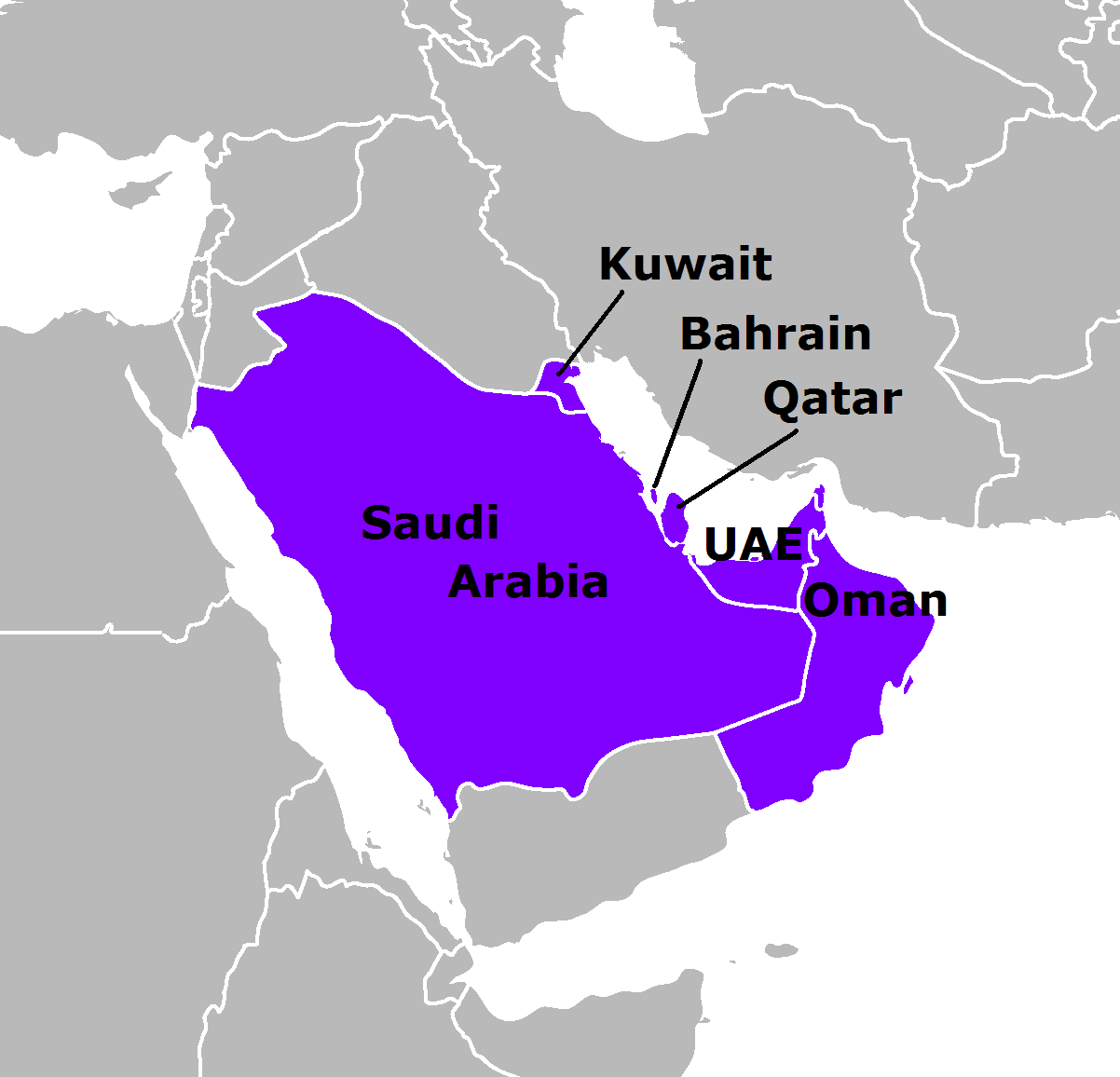
Why would two countries that don’t border the Persian Gulf be invited to join a gulf focused organization? Because Saudi Arabia is trying to form a bloc of states that will support each other in the face of domestic unrest. (they could change their name from the GCC to "The Nondemocratic Arabic-speaking Monarchies of the Eastern Hemisphere", but it doesn’t have the same ring to it)
At this point the die has not yet been cast.
Meanwhile, the maverick in the GCC is Qatar, who seems far more invested in social change than their fellow members. Qatar is still pumped from the goodwill of the Arab street (thanks to the fact that they host Al Jazeera, an integral component of the arab spring). Additionally, they’re bursting at the seams with cash from high oil prices (and the less money you have to spend bribing and repressing your own citizens, the more you have to spend on other things) has decided that “up with people” is their watchword (though it’s a bit muffled when it comes to Bahrain).
Kuwait also seems to be trying to project a pro-proletarian image, pushing for global health initiatives. Clearer evidence of Kuwait’s reticence to toe the Saudi line can be seen in their recent diplomatic resolution with Iran (though this is causing some problems in the Kuwati establishment) Kuwait, however has its own problem, and some strange power plays are underway right now...
Even Saudi Arabia may be developing a bit of a problem, however.
Tuesday, May 17, 2011
Interpreting Ahmadinejad
Last week, in the wake of some contentious actions by Iranian president Mahmoud Ahmadinejad, Supreme Leader Ayatolah Kameni ordered that the president retract his recently appointed intelligence chief and reinstate the predecessor or tender his resignation. At the same time, the regime accused three of the president’s close associates of sorcery and demanded that they be removed from their political positions.
These events came on the heels of a period of silence on the part of Ahmadinejad himself (relative silence, at least - I suspect the man is incapable of actually shutting up) Subsequently, Ahmadinejad made some seemingly straightforward pronouncements insisting that the Iranian people loved the supreme leader and that he himself was committed to the supreme leader, while kowtowing to the leader’s authority by removing his controversial appointees. It seems that he has lost this particular power struggle, and he sat down for an interesting interview two days ago where he ranted for a while about how great everything in Iran is without really saying anything new or particularly true.
Ahmadinejad has long been notorious for his provocative and often outrageous rhetoric. Comments like “this regime occupying Jerusalem must vanish from the page of time” have inspired public debate over their actual and perceived meaning. As the global audience attempts to interpret and understand Ahmadinejad’s true intentions they will do well to keep the Iranian concept of “Zerangi” in mind as a tool for decoding his pronouncements.
On the surface, zerangi can be simply translated as “cleverness”, or “wiliness”. A man who is able to make more money doing less work is zerang; so is a man who successfully cheats on his taxes. This, however, is an overly simplistic understanding of zerangi that fails to capture the essential Iranian-ness of the term. Writing on the topic of “Iranian national character”, anthropologist William Beeman states, “zerangi is an operation on the part of an adroit operator which involves thwarting direct interpretation of one's own actions or deliberately leading others to an erroneous interpretation of those actions while being able to successfully interpret the actions of others.”
In Iranian linguistic culture, context is oftentimes more important than content -- a single sentence can carry a multitude of meanings. As a result, zerangi enters into every interpersonal situation as a potential, foreseeable communication element. At its most sophisticated, effective zerangi allows control over messaging to multiple audiences without ever revealing true intent. Ahmadinejad has shown himself to be a sophisticated practitioner of zerangi, which helps to explain his seemingly erratic proclamations towards not only the West, but towards his own people, and towards the wider Islamic world.
For example, in his most recent address to the United Nations Ahmadinejad presented three alternative 9/11 scenarios thusly:
Nowhere in this or any other part of the speech did Ahmadinejad ever actually reveal his own opinion regarding which of the three scenarios he believed to be true. Assumptions about his opinion can be made, but he speaks carefully enough that there is rarely any guarantee that these assumptions are correct -- if directly challenged on any specific point he always leaves room to qualify his statements after the fact.
When attempting to understand Mahmoud Ahmadinejad’s pronouncements we must remember that he is actively sending multiple messages to multiple audiences as part of a larger process of misdirection and manipulation. To take his public statements at face value is to fall victim to his mastery of zerangi.
These events came on the heels of a period of silence on the part of Ahmadinejad himself (relative silence, at least - I suspect the man is incapable of actually shutting up) Subsequently, Ahmadinejad made some seemingly straightforward pronouncements insisting that the Iranian people loved the supreme leader and that he himself was committed to the supreme leader, while kowtowing to the leader’s authority by removing his controversial appointees. It seems that he has lost this particular power struggle, and he sat down for an interesting interview two days ago where he ranted for a while about how great everything in Iran is without really saying anything new or particularly true.
Ahmadinejad has long been notorious for his provocative and often outrageous rhetoric. Comments like “this regime occupying Jerusalem must vanish from the page of time” have inspired public debate over their actual and perceived meaning. As the global audience attempts to interpret and understand Ahmadinejad’s true intentions they will do well to keep the Iranian concept of “Zerangi” in mind as a tool for decoding his pronouncements.
On the surface, zerangi can be simply translated as “cleverness”, or “wiliness”. A man who is able to make more money doing less work is zerang; so is a man who successfully cheats on his taxes. This, however, is an overly simplistic understanding of zerangi that fails to capture the essential Iranian-ness of the term. Writing on the topic of “Iranian national character”, anthropologist William Beeman states, “zerangi is an operation on the part of an adroit operator which involves thwarting direct interpretation of one's own actions or deliberately leading others to an erroneous interpretation of those actions while being able to successfully interpret the actions of others.”
In Iranian linguistic culture, context is oftentimes more important than content -- a single sentence can carry a multitude of meanings. As a result, zerangi enters into every interpersonal situation as a potential, foreseeable communication element. At its most sophisticated, effective zerangi allows control over messaging to multiple audiences without ever revealing true intent. Ahmadinejad has shown himself to be a sophisticated practitioner of zerangi, which helps to explain his seemingly erratic proclamations towards not only the West, but towards his own people, and towards the wider Islamic world.
For example, in his most recent address to the United Nations Ahmadinejad presented three alternative 9/11 scenarios thusly:
1- “A very powerful and complex terrorist group, able to successfully cross all layers of the American intelligence and security, carried out the attack. This is the main viewpoint advocated by American statesmen.”
2- “Some segments within the U.S. government orchestrated the attack to reverse the declining American economy and its grips on the Middle East in order also to save the Zionist regime. The majority of the American people as well as other nations and politicians agree with this view.”
3- “It was carried out by a terrorist group but the American government supported and took advantage of the situation. Apparently, this viewpoint has fewer proponents.”
Nowhere in this or any other part of the speech did Ahmadinejad ever actually reveal his own opinion regarding which of the three scenarios he believed to be true. Assumptions about his opinion can be made, but he speaks carefully enough that there is rarely any guarantee that these assumptions are correct -- if directly challenged on any specific point he always leaves room to qualify his statements after the fact.
When attempting to understand Mahmoud Ahmadinejad’s pronouncements we must remember that he is actively sending multiple messages to multiple audiences as part of a larger process of misdirection and manipulation. To take his public statements at face value is to fall victim to his mastery of zerangi.
Thursday, May 12, 2011
Bad craziness in Egypt and other chaos elsewhere
Too much happened this past weekend for me to really cover it effectively, and much of my time was spent just keeping track of everything.
Syrian protests kept moving forward with substantial protests in every major Syrian city. The Syrian government deployed troops and tanks everywhere, and responded with violence, killing several but stopped short of outright massacre. I think Assad has realized that his use of lethal force against the protesters has brought him dangerously close to the point where his military will turn on itself, and there have been many reports of that very thing happening. That being said, Turkey (one of the only countries that has any notable leverage with Syria) has finally been taking steps to try and rein Assad in. America’s response to this has been lackluster, but we don’t really have much in the way of options. The withdrawal of our ambassador is really the last measure available to us, and that would severely limit our view into the actual situation on the ground and limit our avenues of communication with elements within the government and elsewhere. I’ll try to write more on that later. In the meantime, here’s an interesting piece on the dynamics of the political situation describing Bashir Assad as a “George W Bush surrounded by Dick Cheneys”
Israel’s fuel supply was tainted this past weekend, causing a few hours of paralysis at Ben Gurion airport. In a country where air travel is the primary means of leaving and entering the country an airline shutdown has disastrous implications. More on that here. Other things are afoot in Israel. The strategic balance seems to have shifted, most notably where Iran is concerned. Iran has been continuously touted as an existential threat to Israel for the past two decades, but most recently former Intel Chief Dagan came out and said what many of us have been insisting on for years – Iran just isn’t that big of a threat to Israel. Certainly their support for Hezbollah (and Hamas to a lesser extent) has caused tremendous strife and the shedding of no small amount of Israeli, Palestinian, and Lebanese blood, but the spectre of Iranian-caused nuclear destruction is absurd (and the idea that Israel could successfully destroy the Iranian nuclear program with airstrikes is rather far-fetched as well). Regardless, Israel has much more pressing issues to address right now. May 15 is Naqba day, the Palestinian counterpoint to Israeli independence day, and no one quite knows what to expect, but there will be a big march from Egypt to Gaza (some of the marching will be done in buses, apparently).
Iran’s weird leadership soap opera continues as well, and although Ahmadinejad has not yet tendered his resignation it seems pretty clear that the supreme leader feels that the president has outlived his usefulness. Outstanding analysis of the situation here,
I don’t really have time to cover it in any substantial form at this point because of the events elsewhere, specifically Egypt. Bad craziness. At least a dozen people dead, and two Coptic churches burned down by angry crowds. The whole mess was the result of a circulating rumor about a young woman who had converted to islam, but was being held captive in one of the churches. The most important piece written on this issue can be found over at the blog “rantings of a sandmonkey” who not only explains why the situation occurred, but points to a way forward for Egyptian muslims and Christians. This is, hands down, one of the best single blogs I’ve ever read on any topic ever. It’s long, but reading it will give you more insight into modern Egyptian culture and poilitics than any nagazine or newspaper article ever could – heartfelt, direct, and simultaneously heartbreaking and inspiring. READ IT.
More coming soon...
Friday, May 6, 2011
Ahmadinejad to resign
http://www.examiner.com/foreign-policy-in-national/breaking-ahmadinejad-to-resign
Don't let the door hit you in the Ma'assalama on the way out.
Don't let the door hit you in the Ma'assalama on the way out.
Thursday, April 21, 2011
Ynetnews editorial - Ignorance or Ideology?
Bad ideas...
As I’ve said before, I’m a generalist when it comes to the Middle East. There are some areas that I know better than others, but there’s no one aspect or region that I can point to as a singular area of expertise. My primary interest is synthesis – making sense of broad aggregates of data on a variety of topics. This means that I will sometimes come to rather different conclusions than those reached by people with a narrower but deeper view of specific area.
Case in point - this FP piece on the Syrian uprising. The author reads it as much less of a genuine people’s movement at work, and instead sees the fingerprints of the MB and other insurgent militant elements all over it. Frankly, I think some of what she’s seeing is what she wants to see, and much of her interpretation doesn’t jibe with what I’ve been following online, but her conclusions are not unreasonable, and she certainly has some windows into the situation that I don’t have.
So I read the article, make some mental notes, maybe follow up on a few things, and continue about my day.
Sometimes, however, I read material that is so shockingly idiotic that it gnaws at me for days. Not the casual ignorance of a YouTube “comments” section, or the absurd conjecture of buffoons like Joseph Farah at World Net Daily – I can laugh at things like that, shake my head, and move on.
No, I’m referring to material like the following Ynetnews.com editorial, which reveals a staggering degree of willful ignorance and ideological blindness by someone who should know better.
Almost every single paragraph of this article contains either a gross distortion of fact or a deliberate dismissal of truth (often both). Crass propaganda from top to bottom.
I’m not going to do a point-by-point rebuttal, but I want to point out a few specific things
She says this like it’s something to be proud of. Israel supported brutal regimes in Argentina and South Africa long after almost every other country in the world had turned against them. Why would this be a positive argument for stronger ties to Saudi Arabia?
Not only that, the US state department was meddling in the internal revolts in Syria and Iran since before they were revolts. Israel often boasts of being the only democracy in the region (a statement whose veracity is contingent on some semantic juggling) and yet the author is advocating allying with the least democratic country in the region to strike against one of the countries that is closest to internal revolution. When Saddam Hussein attacked Iran in the 1980’s he gave the unstable fledgling Islamic Iranian Republic an external foe to unify against, strengthening their national identity, and legitimizing Ayatollah Khomeini’s position as the undisputed leader of the Iranian people. Cooperative action by Israel and Saudi Arabia against Iran would give their currently unstable regime a means to reunify and would undo years of internal and external work towards Iranian regime change.
This is just fear-mongering that is rooted in ignorance, denial, or outright deception. An established Palestinian state would be terrible news for Hamas (and for Fateh), an issue I’ve addressed before and one that I’ll probably address again soon.
The essential problem with this piece is that it was written by someone who has confused presenting a convincing-sounding argument with being factually correct – the technical term for this is “Lawyer”.
As I’ve said before, I’m a generalist when it comes to the Middle East. There are some areas that I know better than others, but there’s no one aspect or region that I can point to as a singular area of expertise. My primary interest is synthesis – making sense of broad aggregates of data on a variety of topics. This means that I will sometimes come to rather different conclusions than those reached by people with a narrower but deeper view of specific area.
Case in point - this FP piece on the Syrian uprising. The author reads it as much less of a genuine people’s movement at work, and instead sees the fingerprints of the MB and other insurgent militant elements all over it. Frankly, I think some of what she’s seeing is what she wants to see, and much of her interpretation doesn’t jibe with what I’ve been following online, but her conclusions are not unreasonable, and she certainly has some windows into the situation that I don’t have.
So I read the article, make some mental notes, maybe follow up on a few things, and continue about my day.
Sometimes, however, I read material that is so shockingly idiotic that it gnaws at me for days. Not the casual ignorance of a YouTube “comments” section, or the absurd conjecture of buffoons like Joseph Farah at World Net Daily – I can laugh at things like that, shake my head, and move on.
No, I’m referring to material like the following Ynetnews.com editorial, which reveals a staggering degree of willful ignorance and ideological blindness by someone who should know better.
Almost every single paragraph of this article contains either a gross distortion of fact or a deliberate dismissal of truth (often both). Crass propaganda from top to bottom.
I’m not going to do a point-by-point rebuttal, but I want to point out a few specific things
Israel’s leadership is more loyal to its Arab allies than President Obama. While Israel stood by Mubarak, it took Obama three days to call for Egypt’s president, a long term US friend, to leave office and to threaten him with foreign aid cuts. It seems that Obama only confronts and abandons allies, but prefers not to meddle in the internal revolts of enemies like Syria and Iran.
She says this like it’s something to be proud of. Israel supported brutal regimes in Argentina and South Africa long after almost every other country in the world had turned against them. Why would this be a positive argument for stronger ties to Saudi Arabia?
Not only that, the US state department was meddling in the internal revolts in Syria and Iran since before they were revolts. Israel often boasts of being the only democracy in the region (a statement whose veracity is contingent on some semantic juggling) and yet the author is advocating allying with the least democratic country in the region to strike against one of the countries that is closest to internal revolution. When Saddam Hussein attacked Iran in the 1980’s he gave the unstable fledgling Islamic Iranian Republic an external foe to unify against, strengthening their national identity, and legitimizing Ayatollah Khomeini’s position as the undisputed leader of the Iranian people. Cooperative action by Israel and Saudi Arabia against Iran would give their currently unstable regime a means to reunify and would undo years of internal and external work towards Iranian regime change.
Third, Iran is the main danger to Saudi Arabia and Persian Gulf states, not Israel, as the WikiLeaks cables revealed, with Saudi King Abdullah repeatedly imploring Washington to “cut off the head of the snake” (Iran) while there was still time.Iran is certainly a danger to Saudi Arabia, primarily to the Saudis’ chokehold on the region through wealth and wealth-based influence. The conflict between Iran and Saudi Arabia, currently being fought through proxies around the M.E. (Particularly in Bahrain, Syria, Yemen, and Iraq) is ultimately about two things – commerce and legitimacy. The Saudis have gotten to where they are through careful negotiation, leverage, coercion and intimidation, but ultimately, they are where they are because they have more oil than everyone else. Their regional religious dominance comes from successful negotiation for authority over the holy cities of Mecca and Medina after the fall of the Ottoman Empire and then spending vast quantities of money to propagate their extremist brand of fundamentalist Islam to the rest of the Muslim world.
Fifth, establishing a Palestinian state is not in the best interest of Saudi Arabia or Israel. As previously happened after Israel withdrew its military forces from Gaza in 2005, Hamas will be able to take over the new state by winning subsequent Palestinian elections, as it did in 2006, or by militarily defeating the PA, as it did in 2007. Such state would become another Iranian base, threatening Israel but also destabilizing Jordan next door and encircling the Saudis from the northwest.
This is just fear-mongering that is rooted in ignorance, denial, or outright deception. An established Palestinian state would be terrible news for Hamas (and for Fateh), an issue I’ve addressed before and one that I’ll probably address again soon.
The essential problem with this piece is that it was written by someone who has confused presenting a convincing-sounding argument with being factually correct – the technical term for this is “Lawyer”.
Thursday, April 7, 2011
Bringing you up to speed...
Sorry for the rather substantial drop in output on my part. In the absence of any reasonable excuses, I’ll blame twitter. (You have been following my twitter feed, right?)
Well, there’s a lot to cover, so let’s get to it…
Libya still leads in the news, and at this point it seems as though the only thing holding the Libyan government together is utter terror. In addition to the defection Moussa Koussa on Sunday, another high profile defector got out of the country two days ago. As the article mentions, we aren’t seeing more defections because anyone who leaves the country without their family is endangering their lives.
The most substantial change In Libya has been General Abdel-Fattah Younis’ return to a military leadership role for the Liberation forces. Younis, a former Libyan Interior Minister, was one of the early high-profile defections from the pro-Ghaddafi camp. He initially assumed a leadership position, commanding a brigade of other Libyan army defectors. This created some conflict among the rebel forces, many of whom questioned his fitness for command (given his long career as a Libyan government insider). Additionally, the rapid initial success of the rebels had bolstered their confidence in their own ability to overcome Gaddafi’s military, and they wanted to preserve the spontaneous nature of the uprising, rather than rely on military assistance (this is also why they initially opposed the idea of a no-fly zone).
General Younis stepped back from his leadership role, and the anti-Gaddafi military forces took a backseat in the fighting until the rebels began to lose in a spectacular fashion a few weeks ago. Even with the advent of the NATO no-fly zone/civilian protection order, there seems to have been continuing debate over the military’s role in the revolution. It was only a few days ago that Younis was restored to his leadership role, something that probably should have happened some time ago.
With Younis in command, the rebels on the front lines (recklessly courageous, but under-equipped, untrained, and unguided) have been supplemented and/or replaced by actual soldiers. Facing stronger opposition, Gaddafi’s forces have redirected some of their attention to the small undefended southern towns that are opposing him but have not yet been integrated into the resistance.
As the Libyan conflict has unfolded, it has caused some major strategic realignment in both Africa and the Middle East. This can be seen in the recent actions of Algeria, Turkey, Jordan, and Qatar.
Algeria has been serving as a main conduit for the arms and mercenaries flowing towards Ghaddafi, a fact that will probably soon bite Algerian president Boutiflaka's regime in the ass. Like Libya, (and unlike Tunisia and Egypt) Algeria’s military serves as an enforcement wing of the ruling party, and Ghaddafi’s failure to stop the Libyan uprising with brute force means that Algeria may have a similar fate in store for them. Not only that, their actions in support of Ghaddafi will not likely be forgotten in a post-Gaddafi state.
Turkey’s role in the Libyan situation has been deeply ambivalent, which has created a great deal of frustration towards turkey on the part of many Libyans. Although they initially opposed intervention, they followed that by assuming a prominent role in NATO’s actions in the Med. They have tried to position themselves as potential interlocutors between Qaddafi and the rest of the world, while decrying his brutality but they don't seem to have been successful with either side of the conflict.
Jordan, on the other hand, has conclusively settled itself on the side of the Anti-Ghaddafi forces by becoming the third Arab country to contribute planes to the NFZ/civilian protection action. This may be a move by the King to strengthen his support among his base. Jordan is fairly unique, demographically - close to 2/3 of its population is ethnically Palestinian, which creates a very odd power dynamic. (Anyone who says that Palestinians are really Jordanians is slinging BS or playing semantic games). For a better understanding of the Jordanian situation (and why there won’t be a revolution in Jordan any time soon) I highly recommend this blog post. King Hussein of Jordan is a sharp guy, and the advantages of having good relations with the emerging new Libyan state are pretty clear.
Qatar, more than any other Arab nation, has recognized the opportunities that a new Libya represents. Their enthusiasm for the NFZ/civilian protection action was evident from the start. I get the impression that the Qatari government sees the future of the Arab world more clearly than any of their neighbors, and has been taking bold steps to ensure their place in it, despite their small size and limited oil resources. Towards this end, they have already signed agreements with the provisional government in Benghazi to purchase a tanker full of oil. (Note – most Libyan oil is what they call “Light Sweet Crude” - extremely high-grade oil that requires less refinement and purification than most other types of crude oil.)
All of these Libya-centered power struggles can be seen as expressions of a larger struggle – the push for stronger standing on the international stage and in the Gulf Cooperation Council (GCC).
Saudi Arabia is probably the strongest player in the GCC, given their close ties to every US administration since Nixon and their staggering oil wealth. For the past 30+ years Saudi Arabia has been furthering its interests in a number of ways, and one of the most notable is the promulgation of its own distinctive Wahabist brand of Sunni Islam. Wahabism is a particularly conservative strain of Salafism, a strict back-to-basics rigidly fundamentalist form of Islam. Salafism, especially the Wahabist variations, has little tolerance for alternate interpretations of Islam and the Quran, which has created some serious conflicts within the Muslim world – especially with Shi’a and Sufi Muslims.
This is important to note because expressions of the Salafi vs. Sufi conflict have been flaring up in Egypt lately – in particular several Sufi shrines have recently been destroyed by Salafist mobs. Sufis regard the burial places of their saints and teachers as being somewhat sacred and often use them as places of prayer and pilgrimage, a practice that Salafis regard as tantamount to idolatry or even heresy. (Note – don’t confuse the Salafis and the Muslim Brotherhood. The MB represents and includes a much more diverse range of Islamic expression.)
I raise this issue because Saudi Arabia heavily funds their Salafist brethren in Egypt and the increasingly aggressive public actions by Egyptian Salafis carries the imprimatur of Saudi interference. Egypt and Saudi Arabia are not known for cordial relationships with each other, but the recent events are likely to drive even more wedges between the two states and push Egypt towards the other big player in the Gulf – Iran.
The Middle East realignment can also be seen in some notable recent events in Syria (though in some rather counterintuitive ways). Shortly after the protests in Daraa started rapidly escalating the King of Saudi Arabia called Bashir Assad to assure him of Saudi Support. This is strange for a number of reasons, but most particularly because for the past 40+ years Syria has been either loosely or tightly aligned with the Baathist/Nasserist bloc of Arab nationalists (particularly Egypt, Iraq, Syria, and to a lesser extent Libya and Algeria). This group has traditionally been locked in competition with the pan-Islamist royalists, especially Saudi Arabia. Not only that, but Assad, his family, and the rest of the Syrian government are Alawites, a sect of Shi’a Islam (remember what I just said about Salafis/Wahabis and Shi’a?).
One of the commonly heard chants in the streets of Syria last week was "No Iran, no Hezbollah, we want a Muslim who fears God." (it's catchier in Arabic) The accusation that Assad is insufficiently religious seems to have struck a nerve, and Assad seems to be trying to get more support from the religious conservatives in Syria by rolling back some of the social reforms of the past few years. (He’s not rolling back political reforms because there haven’t really been any) It could be that he’s backing away from Iran and towards Saudi Arabia to preserve his power structure. He's also taking big steps to gain the favor of Syria's substantial disenfranchised Kurdish population.
More on Syria's tenuous stability here.
Well…that’s plenty for now. Barring some other major upheaval I’ll be getting around to addressing Iraq and Bahrain this weekend.
Saturday, March 26, 2011
A whole mess of updates from all over!
Friday is always a big day in the Middle East. Just about every single major protest or rally that has taken place from Morocco to Iran has reached its peak after Friday evening prayers. Yesterday was no exception, and today seems like a good day to sort out some of the events from the past few days and try and make sense of where things are in the Middle East.
The first point to mention is my recent entry into the world of Twitter. I’ve been following multiple Twitter feeds for quite some time (beginning back in 2009 with the Iranian post-election protests), but I’ve been leery of going any deeper into that chaotic yammering mass. My time at the nonprofit technology conference last week however convinced me that it was no longer something I could reasonably avoid.
My Twitter name is ixakRubicon, but if you’re not on Twitter you can also see my “tweets” on the right column feed of this blog. I’ll be mostly using the feed to share links and “re tweet” notable tweets from other people that I’m following. I promise, I won’t be using it to talk about my new haircut (which is spiffy), what I ate for breakfast (egg sandwich), or what the guy next to me on the train yesterday smelled like (urine).
If you are among the twitterati, please follow me. It gives my life purpose and meaning.
Now on to the things that matter:
***
***
Libya - rebels are making progress once more. Pro-Qadhafi forces have retreated from the besieged cities of Misrata and Ajdabiya. There have also been reports of tanks and armored trucks being abandoned by the pro-Qadhafi forces because of fuel and ammunition shortages (remember what I said the other day about supply chains?).
White House comments on America's involvement in the NFZ+ can be found here if you missed them, with a more extensive speech coming on Monday. Steve Negus has some relevant comments over at thearabist.net - "Consensus vs Clarity"
The United Arab Emirates have also made another interesting move with some ambiguous geopolitical ramifications. They have joined the African Union as officially recognized observers. This is notable for a few reasons, most immediately the contrast between their active participation in airstrikes on Libya and the denunciation of those attacks by the African Union. Their respective diferences over Libya, this certainly indicates a heightened degree of interest in Africa by the UAE, presumably for commercial reasons, but potentially for other reasons as well.
***
In Yemen, talks of a potential power transfer are under way, possibly over the next few days.
Frankly, this may be little more than a stalling tactic on the part of the current president - power would most likely be transferred into the hands of one of his supporters. Despite the fact that nothing really seems to be happening beyond talking, it’s still too early to write off the power transfer idea. The fact that the people of Yemen have been able to push Saleh this far means that they can probably push further.
***
On the topic of elections, Egypt’s Wafd party is showing its true colors, stating that they are opposed to any international election monitoring in the fall (Google translate version here). Reaction to the statement has yet to be seen on a wide scale, but initial reactions have been (predictably) outrage and anger by the youth who participated on the protest movement.
***
Some interesting power struggles going on in Gaza as well, as Hamas tries to rein in the violent actions of Islamic Jihad.
***
***
The situation in Syria keeps getting more and more serious (or should I say Syrias?). Protesters burnt down a Baath party headquarters today and the protests continue to escalate in response to the governments violent attempts to suppress them.
The US role in the operation has been downgraded, with NATO taking the leadership role and the majority of the sorties being flown by French and British planes as well as several miscellaneous European countries and Canada. Fighter planes from Qatar and the United Arab Emirates are also participating, though it should be pointed out that Qatar is one of the only countries in the ME that hasn’t had major protests (it is also the home of Al Jazeera), and the UAE may have committed planes in order to buy themselves some slack for their participation in the Bahrain crackdown. Nonethless, the participation in this campaign by Arab governments should not be taken lightly.
***
***
The United Arab Emirates have also made another interesting move with some ambiguous geopolitical ramifications. They have joined the African Union as officially recognized observers. This is notable for a few reasons, most immediately the contrast between their active participation in airstrikes on Libya and the denunciation of those attacks by the African Union. Their respective diferences over Libya, this certainly indicates a heightened degree of interest in Africa by the UAE, presumably for commercial reasons, but potentially for other reasons as well.
***
In Yemen, talks of a potential power transfer are under way, possibly over the next few days.
Frankly, this may be little more than a stalling tactic on the part of the current president - power would most likely be transferred into the hands of one of his supporters. Despite the fact that nothing really seems to be happening beyond talking, it’s still too early to write off the power transfer idea. The fact that the people of Yemen have been able to push Saleh this far means that they can probably push further.
***
On the topic of elections, Egypt’s Wafd party is showing its true colors, stating that they are opposed to any international election monitoring in the fall (Google translate version here). Reaction to the statement has yet to be seen on a wide scale, but initial reactions have been (predictably) outrage and anger by the youth who participated on the protest movement.
Another interesting event took place in Egypt as well. Two of the men responsible for the assassination of Anwar Sadat were released from jail a few days ago. This is part of a very complex power play by the military that I’m still trying to decode. I’ll try to keep you apprised of the situation as clarity comes.
***
Some interesting power struggles going on in Gaza as well, as Hamas tries to rein in the violent actions of Islamic Jihad.
***
In Jordan there have been some protests calling for a transition to a constitutional monarchy, but it remains to be seen whether or not they will gain traction. There have also been robust counter-protests - The King of Jordan still enjoys strong support from certain sections of the country, and some angry rhetoric has been flying back and forth over the issue. A heartfelt and melancholy account of a March24 protest can be found here: "The Quick Death Of Shabab March 24 And What It Means For Jordan" I HIGHLY reccommend it. The author really cuts to the heart of the issue in Jordan, and why reform of the type that we are seeing elsewhere may be a long time coming in Jordan.
***
The situation in Syria keeps getting more and more serious (or should I say Syrias?). Protesters burnt down a Baath party headquarters today and the protests continue to escalate in response to the governments violent attempts to suppress them.
An interesting consequence of the current situation in Syria is that Hezbollah has positioned itself very squarely on the side of Assad, a strategic decision that will probably come back to bite them in the ass later on. The Alawite sect of Islam that Assad and his core supporters belong to is viewed with some suspicion by many of the more conventional Sunni Arabs of Syria. The government’s close ties to the Shiites of Hezbollah and to the Iranian government have give the unhappy parts of the population ammunition for accusations of borderline heresy.
***
On the topic of Iran, an additional point to mention – the US government is considering dropping Mujahedin-e Khalq (MEK) from the list of international terrorist organizations, a move that could have a serious negative impact on the homegrown Iranian green movement. Excellent article describing the situation over at salon.com http://www.salon.com/news/politics/war_room/2011/03/26/iran_green_movement/index.html
***
***
On the topic of Iran, an additional point to mention – the US government is considering dropping Mujahedin-e Khalq (MEK) from the list of international terrorist organizations, a move that could have a serious negative impact on the homegrown Iranian green movement. Excellent article describing the situation over at salon.com http://www.salon.com/news/politics/war_room/2011/03/26/iran_green_movement/index.html
***
There is also some positive State Department news - they have developed a nifty piece of software called the “Panic Protester Button”, a phone app that can be activated if a protester is about to be arrested. If the “panic” button is pressed the phone immediately erases all saved contact information from the phone and sends an emergency alert to other activists. This useful little piece of software shows an encouraging degree of innovation and adaptability on the part of our own State Department, (though an independently developed third-party version probably has a better chance of widespread adoption in places where the US government is viewed with almost as much suspicion as the local government.
***
One last thing to mention: Sudan – Protests against Omar al-Bashir are still trying to take off. I’ll keep you posted on those.
***
Well, that’s all for now, thanks for tuning in, and don’t forget to follow me on Twitter!
***
One last thing to mention: Sudan – Protests against Omar al-Bashir are still trying to take off. I’ll keep you posted on those.
***
Well, that’s all for now, thanks for tuning in, and don’t forget to follow me on Twitter!
Wednesday, March 2, 2011
February was an interesting month, wasn’t it? Wait till you see what's next.
February was an interesting month, wasn’t it?
Mark my words, March will be even more interesting.
***
Egypt and Tunisia still have a long way to go, though Tunisia has finally lifted its state of emergency, and Egypt is fast tracking elections. I’ll try to keep you apprised of those situations as best I can, but it won’t be easy given how much other stuff is coming down the pipeline. Updates are probably going to come in the form of links, rather than summaries.
If you're interested in the current power structure in Egypt, Issandr el Amrani over at the arabist.net has put up a particularly informative post that's worth checking out.
***
Iran – The March 1 protests were notably different than those seen previously, particularly in the degree to which violence has been a factor. Although the Feb14 protesters did suffer a few attacks, and the 2009 protests saw several clashes between the protesters and the police/militia, yesterday there was much more rapid aggression on the part of the police (including deployment of riot squads) and the crowds (which were notably larger than the Feb14 crowds) were quick to counter with violence of their own. A recap of the days events can be found here.
Prominent opposition leaders Moussavi and Karroubi, already under house arrest, may have been recently imprisoned by the Iranian government. The government denies this, however, saying it is only propaganda generated by the MKO. (Not than anyone believes them)
The Iranian government began utilizing an interesting tactic in response to the tech-driven nature of the protests – anyone (particularly youth) walking or driving in the area near where the planned protests planned took place was stopped by police. The police checked their ID and searched their bags/pockets. Anyone with a phone, camera, or laptop was then photographed. This represents a frighteningly smart shift in the government’s efforts to counter the protests, and provides them with a fairly comprehensive database of tech/media savvy youth that may or may not be connected to the protests. The database will doubtlessly be used to identify potential activists for targeted monitoring.
There is good news as well - some unrest among Iranian labor groups has begun to surface. As I said before, the Green Movement has little hope of success if it doesn't gain traction among the trade unions and merchants.
***
Saudi Arabia has done an interesting thing...and by interesting I mean, awful with ominous portent for the future.
Shooting random Saudi facebook protest-organizers is not a good way to tell the world that you are secure in the legitimacy of your mandate to lead.
***
Over in Libya, Qaddafi is holed up in Tripoli with the last of his army, periodically making attacks on nearby cities. This situation has gotten so bad that the supposedly elite Khamis Bragade has been unable to break through the defenses of a civilian uprising.
Looking back at my post from Saturday, it seems that I was less generous than I should have been with regards to how long brother leader’s regime will stand – with close to 90% of the country lost (geographically and demographically) the only thing keeping Qaddafi afloat now is the hard-line loyalists, his mercenaries, and his fanatical self-confidence and delusion.
Regardless, the inevitability of such a thing is virtually inarguable.
Intervention seems to be a faint possibility, but at this point the most important services that our (and by “our” I mean “American”) troops can do is be prepared to deliver services to a country in desperate
need of food and medical supplies.
The possibility of a no-fly zone may be moving closer, but given the relative speed of your average United Nations resolution versus the pace of this particular revolution, it seems unlikely that we will see anything resembling the enforced no-fly zone that that we saw in Iraq during the last few years of the 20th century. Furthermore, it seems that many of the recent reports of air attacks against protesters and anti-government forces are not actually air attacks, but halfhearted overtures of attack, followed by deliberate mis-targeting that harms no one. There has even been at least one reported case of a Libyan pilot deliberately injecting from his plane, deliberately crashing it into an open field rather than fire on Libyan citizens.
Regardless, the longer this conflict continues, the greater the likelihood of intervention.
In terms of Libya’s outlook for the future - it’s anybody’s guess, but some scenarios seem more likely than others.
The two that I have seen cited most often are worlds apart – stable constitutional democracy or fragmentation. (note: both of these scenarios are contingent on the absence of US/UK/UN intervention. If external forces are involved then the dynamic changes rather dramatically.)
Libya does have few advantages over egypt and Tunisia.
1. When this grisly scene finally reaches its conclusion, there won’t be much left of the old guard. Some of the more powerful tribal leaders will certainly win big in an election scenario, but it’ll be pretty difficult for anyone with deep connections to the Libyan regime to retain much power. Libya will be taking their steps towards freedom without the entrenched pwer structures that Egypt and Tunisia are still struggling with.
2. Despite the general failure of the political system invented by Gaddafi and promulgated in his “Green Book”, an important aspect of the “Jamhariyya” is its heavy reliance on direct democracy for local governance. Although the system was severely hampered by the corruption and interference from nepotistic elites, the Libyan people are quite familiar with the democratic process.
3. Lack of diversity – Libya has a strong sense of self identity. This is not to say that Libya is homogeneous, but its religious and ethnic minority populations are quite small - this is also good because it means they are less likely to be seen as a political, cultural, or demographic threat and can more comfortably be integrated into the process of democratization.
However, some inclinations towards chaos are also present, particularly the inter-tribal rivalries that Gaddafi has spent decades exploiting. I am fairly optimistic about the potential for good outcomes but the issue of vendetta and retaliation is very real, and will probably be with us for years if a vehicle resolution is not in place.
This is an issue that many countries face in the aftermath of heavily repressive regimes, and a variety of coping methods have been used by the dazed and damaged populations as they emerge from under the boot of oppression. I’ll try to get a post up in the next few days on how South Africa, Spain and Argentina handled the ghost of their bloody and brutal history – there are important lessons to be learned from all three examples.
***
The most notable “I sure didn’t see that one coming” from the past week is Oman. I know a thing or two about Oman (I did some work for the Sultan Qaboos Cultural Center when I was interning at the Middle East Institute) and the Sultan has a reputation for being progressive and forward thinking, so I was particularly surprised to see that they, too, are not immune from the momentum of the Arab Spring. I’ll be putting up a piece on Oman, Sultan Qaboos, and Ibadi Islam in the next few days - stay tuned.
(In the meantime you can scroll through a piece on Frankincense that I put together for the SQCC five years ago - I think some of it got lost when it was posted online, but it's still a fun little piece)
Friday, February 25, 2011
Libya and the wider situation - Updates
Algeria has finally lifted the state of emergency that has existed since the early ‘90s which means that the government’s authority to use the military will, in theory at least, be curtailed. Given that Bouteflika has been using the military against dissidents for 20 years, it remains to be seen whether ending emergency powers will actually change anything.
“Gaddafi’s gift”, as I called it on Wednesday, may be paying off in Yemen, where after multiple deaths the President actually issued an order for the military to protect the protesters. We’ll see how long it lasts.
The violence against protesters in Bahrain also seems to have paused for the moment, as the various parties gather themselves for the next round of who knows what.
Iran seems grim. The protests aren’t really getting as much traction as they need to, and without the support of the workers unions and the merchants it doesn’t look good for them. Some rather sobering analysis here. An interesting election took place yesterday for the leadership of Iran's chamber of commerce which may play out in some interesting long-term ways as Iranian business leaders continue to flex and grow their power.
Saudi Arabia – After several weeks of surgery and convalescence in Europe and Morocco, King Abdullah returned home and showered his citizens with $37,000,000,000 in gifts/benefits in a move that, frankly, comes across as a cheap way of paying off his citizens to keep them happy. And there’s plenty more money where that came from, particularly given that oil prices are now over $120 a barrel. (On that note, Tom Friedman, whose NYT columns have been pretty hit-or-miss for quite some time, finally had a really good one this week)
Overall, even if countries like Saudi Arabia, Syria, Morocco and Jordan only see minor reforms in the aftermath of Egypt, Tunisia, and Libya, it’s still a positive step forward. Rights, once given, are harder to take away, and every crack in the façade is a step closer to regime collapse.
In Israel there were rocket attacks from Gaza into Be'er Sheva yesterday, which fortunately only damaged a building and didn’t take any lives. As expected, the IDF response was swift and unequivocal. I’ll be putting up a post on Israel in a day or two, so I’m not going to get too deeply into that right now.
The situation in Libya can’t last much longer. A constitutional committee is underway in Benghazi and despite the viciousness of Gaddafi’s actions his troops are rapidly losing ground. His personal Envoy just fled to Egypt to beg for asylum and there are rumors of a split in the Khamees brigade, which (if true) would mean that it’s pretty much over for Brother Leader.
End of the line, G.
(Stay tuned to http://www.libyafeb17.com/ for continual updates)
I’ve had some interesting conversations about US intervention in Libya, and as much as a no-fly zone would be nice, it unfortunately isn’t as simple or easy as it sounds. Some good analysis here and here. As shocking and horrifying as the reports of planes firing on crowds of people is, the vast majority of the killing has been done on the ground with soldiers, mercenaries, tanks, and artillery. To do something really effective would require much more than keeping the government’s planes on the ground, and if this was a more protracted event intervention would probably be a realistic option but it looks to be just about over.
So what can we do? For one, Libya will need tremendous amounts of medical assistance once this ends (they actually need it now, but their #1 priority is to get rid of Gaddafi). I’m in the process of contacting some relief and aid agencies and some Libyans to see if we can coordinate or participate in some assistance activities – I’ll keep you posted.
Monday, February 21, 2011
Another week begins.
What now?
Quite a weekend for me. Yesterday my page had some 400 hits in a 24-hour period, a pretty dramatic record, considering I was averaging about a hundred hits a day previous to that (though I’ve only been doing this seriously for less than a month).
I’m pretty happy with my coverage of the situation with Libya, given that much of what I was reporting on the 19th is finally making it into the mainstream news. This raises a point (or two) I’d like to clarify for the sake of my reading audience - I am not a journalist. In this current situation that is something of an advantage. The situation on the ground is so chaotic that by the time a single event can be confirmed and verified, the larger situation has already changed dramatically. In Libya, the news that was three hours old might as well have been news that was a day old, and news that was a day old was still being vetted for accuracy by the international news agencies.
For me to rely on insider commentary, twitter feeds, uploaded YouTube videos, and hastily posted messages and audio files on poorly put together webpages is rather dangerous.
Hyperbole, confusion, mistranslation, panic, misinformation, wishful thinking, personal bias, and deliberate propaganda are all factors that must be taken into consideration when relaying information from the sources. I am, essentially, flying by the seat of my pants and hoping that my own knowledge and critical thinking capabilities are sufficient to the task at hand. Only time will tell how right or wrong I’ve been in my assessments (although frankly, I think I’ve been doing pretty well all things considered).
Fortunately, no one’s making policy decisions based on my read on the Middle East (I hope).
Frankly, I don’t think anybody’s making any policy decisions at all at the moment. Right now, everyone’s in tactical mode rather than strategic mode, and that’s not likely to change until the situation becomes a wee bit less volatile.
Anyway, thanks for reading. By the way, while on the topic, I know that many of you are educated and intelligent people - if you read something here that strikes you as being questionable, or flat out wrong, please, please, please feel free to address i. I’d rather be publicly corrected than publicly wrong.
Now, on to the material at hand:
***
Libya - I really think this is the end of the line for the Libyan regime. As I mentioned yesterday, al-arrabiyya reported that Qaddafi had left the country for South America (Brazil or Venezuela). Unfortunately, no one else is supporting it, so I can't vouch for its accuracy at this point.
One of Qaddafi's sons, Seif al-Islam, gave an unintentionally hilarious off-the-cuff speech last night (I hope it was off-the-cuff, if those were his prepared remarks then that boy needs help). Several translations can be found, and I highly recommend that you read it in full, it’s full of crazy little gems like,
or this one:
Ayyad elBaghdadi did a real-time translation of the speech on the fly via twitter and at the end of it said, “I feel stupider just for having written it down”.
The level of denial is a full magnitude higher than Mubarak’s was during his final speech, but as funny as the whole thing may be for us abroad, the situation on the ground for Libyans is incredibly grim. As I said before, it is impossible to overstate the bravery of the Libyan people at this point. After the past three days of conflict, everyone in the streets knows that death is a strong likelihood.
Although the general populace, large numbers of the tribally affiliated population, and many members of both the army and the police have joined with the uprising, the Libyan government has three pillars of support:
The Elite military, led by one of Qaddafi’s sons, and heavily staffed with regimes loyalists, these people are not merely fighting at the whim of the leadership, they are likely fighting for their own lives, and as such will not be pulling punches when it comes to combat (this is no longer crowd control, this Is all-out combat)
The Libyan Air Force, which draws heavily from the Qadhadfa (Qaddafi’s own tribe) for its pilots and officers. Family loyalty is essential here as are old tribal rivalries. Unsurprisingly, nepotistic favoritism has been very good to Qaddafi’s tribe, but very problematic for inter-tribal relations. (Short article on this here) Additionally, it’s a lot easier to kill people from a fighter plane than it is with a machine gun. Bombing of major urban areas has already been reported, and I just don’t know how long it will take to get the situation under control. If the ground crews to stop supporting sorties, then it could end sooner than later, but I honestly have absolutely no idea what the likelihood of something like that is.
The mercenary forces who have been confirmed in Benghazi and several other places are the third pillar of regime support, and the most unpredictable. They are reportedly from places like Chad, Bangladesh and (? Niger), and they don’t stand a chance of survival if captured. Many of the worst atrocities witnessed in Benghazi and other eastern cities have been attributed to the mercenaries, and they have shown their contempt for the general populace through their ruthless violence. At this point they probably just want to escape with their lives, and there’s a good chance that many of them won’t. Well armed, terrified man with few options are capable of truly horrific things.
That being said, I don’t think the government’s resistance is sustainable. The only question is how much damage will they unleash on the populace before they are taken down? (Check out Dirk Vanderwall’s analysis here) Plus his book is right there on the sidebar ---->
***
Yemen - I’m sorry to say I haven’t had a lot of time to follow Yemen, given the situation in Libya, but a few things should be mentioned: The president has refused to step down. The violence has been steadily escalating, though not nearly to the same degree as Libya. Good ongoing analysis here.
**
Iran - Hard to say. The green movement Is no longer concerned with the president, at this point they’ve set their sights on being supreme leader himself, Kahmeini. This implies a restructuring of the entire Iranian political system, rather than just political reform, and the chances for success are anyone’s guess at this point.
The protests have continued steadily, with building intensity, but nothing on the scale that we witnessed back in 2009. Thousands in the streets at times, but not hundreds of thousands.
An interesting rumor has been circulating, saying that Hezbollah members have been supporting the Iranian regime during crackdowns on protesters. Similar rumors were circulating in 2009, but were never confirmed. It should be mentioned here that such a thing is possible but, it is also quite possible that the rumor is a piece of targeted propaganda intended to drive a wedge between the green movement protesters and the regime’s support for militant Shiite activity abroad.
***
This is particularly interesting because in Bahrain the government is accusing Hezbollah of giving support to the protesters in the Pearl roundabout (now being called martyr's roundabout). While on that topic, the situation in Bahrain doesn’t seem to be moving towards resolution yet. The protesters continue to occupy the roundabout, and the government continues to make unsuccessful overtures towards resolution along with halfhearted moves towards another round of crackdowns. The acts of violence of the past few days seem to have quieted down, but there are still reports of a strong Saudi presence on the ground.
Nicholas Kristoff has a good piece up in the NYT today
***
Saudi Arabia has been awfully quiet lately. As Napoleon said, never interrupt your enemy when he is busy making a mistake. Libya and Egypt and Iran have all been longtime competitors and/or opponents of the Saudi regime, and the Saudi royal family is doubtless watching these events extremely closely as they unfold. Although their position is not nearly as precarious as that of the various North African regimes, the events in Bahrain must be incredibly worrying to them. Saudi Arabia and Bahrain have very close relationships, and although Saudi Arabia does not share Bahrain’s large disenfranchised Shiite population, they do, nonetheless, have a significant concentration of Shiites in their Eastern oil producing territories. Actions by the Bahraini government against its Shi’a population, particularly with the support of the Saudi military, could create serious tensions within Saudi Arabia’s small but defiant Shiite population.
***
One last point (I may post another update later today) Morocco was the scene of several major protests yesterday - some good recap and analysis can be found here. The vast majority of these protests were peaceful, with the exception of one in Tangier that degenerated into rioting and looting. I suspect that if the Moroccan government is able to mitigate the response in show clear signs of attentiveness and responsiveness to the needs of their citizens, they’ll be okay. If, however, the violence expands and the government is overly heavy-handed in its response, then I’ll have to move Morocco from the “safe” column and into the “regimes in play” column.
***
Many more links and much more extensive information on the greater middle east can be found in today's post at the Arabist: http://www.arabist.net/blog/2011/2/21/sehams-regional-links-2011-02-21.html
Quite a weekend for me. Yesterday my page had some 400 hits in a 24-hour period, a pretty dramatic record, considering I was averaging about a hundred hits a day previous to that (though I’ve only been doing this seriously for less than a month).
I’m pretty happy with my coverage of the situation with Libya, given that much of what I was reporting on the 19th is finally making it into the mainstream news. This raises a point (or two) I’d like to clarify for the sake of my reading audience - I am not a journalist. In this current situation that is something of an advantage. The situation on the ground is so chaotic that by the time a single event can be confirmed and verified, the larger situation has already changed dramatically. In Libya, the news that was three hours old might as well have been news that was a day old, and news that was a day old was still being vetted for accuracy by the international news agencies.
For me to rely on insider commentary, twitter feeds, uploaded YouTube videos, and hastily posted messages and audio files on poorly put together webpages is rather dangerous.
Hyperbole, confusion, mistranslation, panic, misinformation, wishful thinking, personal bias, and deliberate propaganda are all factors that must be taken into consideration when relaying information from the sources. I am, essentially, flying by the seat of my pants and hoping that my own knowledge and critical thinking capabilities are sufficient to the task at hand. Only time will tell how right or wrong I’ve been in my assessments (although frankly, I think I’ve been doing pretty well all things considered).
Fortunately, no one’s making policy decisions based on my read on the Middle East (I hope).
Frankly, I don’t think anybody’s making any policy decisions at all at the moment. Right now, everyone’s in tactical mode rather than strategic mode, and that’s not likely to change until the situation becomes a wee bit less volatile.
Anyway, thanks for reading. By the way, while on the topic, I know that many of you are educated and intelligent people - if you read something here that strikes you as being questionable, or flat out wrong, please, please, please feel free to address i. I’d rather be publicly corrected than publicly wrong.
Now, on to the material at hand:
***
Libya - I really think this is the end of the line for the Libyan regime. As I mentioned yesterday, al-arrabiyya reported that Qaddafi had left the country for South America (Brazil or Venezuela). Unfortunately, no one else is supporting it, so I can't vouch for its accuracy at this point.
One of Qaddafi's sons, Seif al-Islam, gave an unintentionally hilarious off-the-cuff speech last night (I hope it was off-the-cuff, if those were his prepared remarks then that boy needs help). Several translations can be found, and I highly recommend that you read it in full, it’s full of crazy little gems like,
We all now have arms. At this time drunks are driving tanks in central Benghazi. So we all now have weapons. The powers who want to destroy Libya have weapons. There will be a war & no future. All the firms will leave, we have 500 housing units being built, they won't be completed. Remember my words. 200 billion dollars of projects are now underway, they won't be finished.
or this one:
The army said that some protesters were drunk, others were on hallucinogens or drugs. The army has to defend its weapons. And the people were angry. So there were deaths, but in the end Libyans were killed.
There are thee parts behind this
1- Political Activists whom we agree with,
2- What happened in Bayda are Islamic elements. Bayda is my town, my mother is from there. People called me. They stole weapons and killed soldiers. They want to establish an Islamic Emirate in Bayda. Some people took drugs & were used by these protesters.
3. The third part are these children who took the drugs and were used. These are facts like it or not.
The level of denial is a full magnitude higher than Mubarak’s was during his final speech, but as funny as the whole thing may be for us abroad, the situation on the ground for Libyans is incredibly grim. As I said before, it is impossible to overstate the bravery of the Libyan people at this point. After the past three days of conflict, everyone in the streets knows that death is a strong likelihood.
Although the general populace, large numbers of the tribally affiliated population, and many members of both the army and the police have joined with the uprising, the Libyan government has three pillars of support:
The Elite military, led by one of Qaddafi’s sons, and heavily staffed with regimes loyalists, these people are not merely fighting at the whim of the leadership, they are likely fighting for their own lives, and as such will not be pulling punches when it comes to combat (this is no longer crowd control, this Is all-out combat)
The Libyan Air Force, which draws heavily from the Qadhadfa (Qaddafi’s own tribe) for its pilots and officers. Family loyalty is essential here as are old tribal rivalries. Unsurprisingly, nepotistic favoritism has been very good to Qaddafi’s tribe, but very problematic for inter-tribal relations. (Short article on this here) Additionally, it’s a lot easier to kill people from a fighter plane than it is with a machine gun. Bombing of major urban areas has already been reported, and I just don’t know how long it will take to get the situation under control. If the ground crews to stop supporting sorties, then it could end sooner than later, but I honestly have absolutely no idea what the likelihood of something like that is.
The mercenary forces who have been confirmed in Benghazi and several other places are the third pillar of regime support, and the most unpredictable. They are reportedly from places like Chad, Bangladesh and (? Niger), and they don’t stand a chance of survival if captured. Many of the worst atrocities witnessed in Benghazi and other eastern cities have been attributed to the mercenaries, and they have shown their contempt for the general populace through their ruthless violence. At this point they probably just want to escape with their lives, and there’s a good chance that many of them won’t. Well armed, terrified man with few options are capable of truly horrific things.
That being said, I don’t think the government’s resistance is sustainable. The only question is how much damage will they unleash on the populace before they are taken down? (Check out Dirk Vanderwall’s analysis here) Plus his book is right there on the sidebar ---->
***
Yemen - I’m sorry to say I haven’t had a lot of time to follow Yemen, given the situation in Libya, but a few things should be mentioned: The president has refused to step down. The violence has been steadily escalating, though not nearly to the same degree as Libya. Good ongoing analysis here.
**
Iran - Hard to say. The green movement Is no longer concerned with the president, at this point they’ve set their sights on being supreme leader himself, Kahmeini. This implies a restructuring of the entire Iranian political system, rather than just political reform, and the chances for success are anyone’s guess at this point.
The protests have continued steadily, with building intensity, but nothing on the scale that we witnessed back in 2009. Thousands in the streets at times, but not hundreds of thousands.
An interesting rumor has been circulating, saying that Hezbollah members have been supporting the Iranian regime during crackdowns on protesters. Similar rumors were circulating in 2009, but were never confirmed. It should be mentioned here that such a thing is possible but, it is also quite possible that the rumor is a piece of targeted propaganda intended to drive a wedge between the green movement protesters and the regime’s support for militant Shiite activity abroad.
***
This is particularly interesting because in Bahrain the government is accusing Hezbollah of giving support to the protesters in the Pearl roundabout (now being called martyr's roundabout). While on that topic, the situation in Bahrain doesn’t seem to be moving towards resolution yet. The protesters continue to occupy the roundabout, and the government continues to make unsuccessful overtures towards resolution along with halfhearted moves towards another round of crackdowns. The acts of violence of the past few days seem to have quieted down, but there are still reports of a strong Saudi presence on the ground.
Nicholas Kristoff has a good piece up in the NYT today
***
Saudi Arabia has been awfully quiet lately. As Napoleon said, never interrupt your enemy when he is busy making a mistake. Libya and Egypt and Iran have all been longtime competitors and/or opponents of the Saudi regime, and the Saudi royal family is doubtless watching these events extremely closely as they unfold. Although their position is not nearly as precarious as that of the various North African regimes, the events in Bahrain must be incredibly worrying to them. Saudi Arabia and Bahrain have very close relationships, and although Saudi Arabia does not share Bahrain’s large disenfranchised Shiite population, they do, nonetheless, have a significant concentration of Shiites in their Eastern oil producing territories. Actions by the Bahraini government against its Shi’a population, particularly with the support of the Saudi military, could create serious tensions within Saudi Arabia’s small but defiant Shiite population.
***
One last point (I may post another update later today) Morocco was the scene of several major protests yesterday - some good recap and analysis can be found here. The vast majority of these protests were peaceful, with the exception of one in Tangier that degenerated into rioting and looting. I suspect that if the Moroccan government is able to mitigate the response in show clear signs of attentiveness and responsiveness to the needs of their citizens, they’ll be okay. If, however, the violence expands and the government is overly heavy-handed in its response, then I’ll have to move Morocco from the “safe” column and into the “regimes in play” column.
***
Many more links and much more extensive information on the greater middle east can be found in today's post at the Arabist: http://www.arabist.net/blog/2011/2/21/sehams-regional-links-2011-02-21.html
Tuesday, February 15, 2011
How Green was Valentines day in Iran?
No blog yesterday, too much going on for me to really adequately cover until the reliable and the unreliable could be at least nominally sorted from each other. As it stands, parties on both sides of the riot shield stand to benefit through lies and exaggerations – all information needs to be regarded as at least marginally suspect, initially. That being the case, the fact that most groups of protesters are doing their best to document the events on the ground through videos, photos, and personal accounts, while the governments in question are actively suppressing all not-official communications doesn’t really incline me to be all that receptive of the “official” narratives.
***
Iran was the big one, yesterday. If the green movement couldn’t mobilize people in the aftermath of Tunisia and Egypt, the movement could pretty much be considered dead. Fortunately, they hit the streets in a big way, with protests and demonstrations reported in almost all of the major Iranian cities, with crowds as large as 350,00 in Tehran – I can’t vouch for that number, of course, but they certainly seem to have crossed the six-figure mark. Some videos here.
The government’s response was forceful and violent, with tear gas, clubs, rubber bullets, propaganda, and knives sending a clear message – they want this stopped immediately. Whether it will stop is hard to say. Many of the young male protesters stayed in the streets through the night, and the government was reportedly using controlled neighborhood blackouts to stage raids on the various pockets of protesters.
The outcome of yesterday may simply be the clear message that the Green Movement is still alive, but they have shown their hand. Given that the government is executing, on average, one political prisoner every eight hours, the green movement will have to start publicly growing very quickly or the government will grind it down with sheer ruthless brutality.
Violence by the government may have been mitigated by the presence of Turkish president Abdullah Gul, who was beginning a three day visit to Iran, but the government will probably start ratcheting things up even farther. Some members of the Iranian parliament have already publicly called for the execution of opposition leaders Mousavi and Karoubi.
Frankly, I think the Shiites are about to hit the fan.
***
Bahrain – I was mildly surprised by the size of the protests in Bahrain. They were certainly not big enough to be a threat to the government yet, but if they show growth then we could see some dramatic events very soon. The government certainly took the protests seriously, moving riot police into the streets. Conflagrations between protesters and police punctuated the day, with “rolling battles” taking place across the city. It looks like they government is just trying to control the situation at this point, with a mind towards a rapid resolution. (there have, however, been two deaths by police attack, which will not help the government calm things down)
***
Algeria – Things are still happening, but the degree to which they are happening depends on who you talk to. According to the government, a few hundred protesters marched in the capital and a few dozen were arrested due to their unruliness. According to the protesters there were more than 10,000 protesters (a number that they later revised downwards to merely thousands) with hundreds, or possibly more than 1000 arrested.
***
Yemen – Protests have continued to grow here as well, despite accommodating gestures by the government. As long as the crowds don’t feel the need to retire at 1:30 in the afternoon for their daily qat chew this shows no signs of stopping.
***
Sorry for the brevity of this post, more analysis will come later tonight or tomorrow morning.
***
Iran was the big one, yesterday. If the green movement couldn’t mobilize people in the aftermath of Tunisia and Egypt, the movement could pretty much be considered dead. Fortunately, they hit the streets in a big way, with protests and demonstrations reported in almost all of the major Iranian cities, with crowds as large as 350,00 in Tehran – I can’t vouch for that number, of course, but they certainly seem to have crossed the six-figure mark. Some videos here.
The government’s response was forceful and violent, with tear gas, clubs, rubber bullets, propaganda, and knives sending a clear message – they want this stopped immediately. Whether it will stop is hard to say. Many of the young male protesters stayed in the streets through the night, and the government was reportedly using controlled neighborhood blackouts to stage raids on the various pockets of protesters.
The outcome of yesterday may simply be the clear message that the Green Movement is still alive, but they have shown their hand. Given that the government is executing, on average, one political prisoner every eight hours, the green movement will have to start publicly growing very quickly or the government will grind it down with sheer ruthless brutality.
Violence by the government may have been mitigated by the presence of Turkish president Abdullah Gul, who was beginning a three day visit to Iran, but the government will probably start ratcheting things up even farther. Some members of the Iranian parliament have already publicly called for the execution of opposition leaders Mousavi and Karoubi.
Frankly, I think the Shiites are about to hit the fan.
***
Bahrain – I was mildly surprised by the size of the protests in Bahrain. They were certainly not big enough to be a threat to the government yet, but if they show growth then we could see some dramatic events very soon. The government certainly took the protests seriously, moving riot police into the streets. Conflagrations between protesters and police punctuated the day, with “rolling battles” taking place across the city. It looks like they government is just trying to control the situation at this point, with a mind towards a rapid resolution. (there have, however, been two deaths by police attack, which will not help the government calm things down)
***
Algeria – Things are still happening, but the degree to which they are happening depends on who you talk to. According to the government, a few hundred protesters marched in the capital and a few dozen were arrested due to their unruliness. According to the protesters there were more than 10,000 protesters (a number that they later revised downwards to merely thousands) with hundreds, or possibly more than 1000 arrested.
***
Yemen – Protests have continued to grow here as well, despite accommodating gestures by the government. As long as the crowds don’t feel the need to retire at 1:30 in the afternoon for their daily qat chew this shows no signs of stopping.
***
Sorry for the brevity of this post, more analysis will come later tonight or tomorrow morning.
Sunday, February 13, 2011
Iran - Green Movement remobilization on Feb. 14.
“You should not come to visit - the weather here is very bad.”
These were the words of a friend’s father when she called him at their family home in Tehran last week. When pressed for details, he would not elaborate, but simply reiterated his message. “It’s very bad. The weather is very bad.”
From all reports, the weather has been clear and chilly in Tehran - about the same as Baltimore. The “weather”, on the other hand, has been terrible.
The Iranian government has taken advantage of the world’s focus on Egypt by conducting a continual spate of jailings and executions over the past two weeks. They’ve been confiscating cell phones from reformist leaders, instituting internet controls, putting prominent opposition individuals under house arrest, and making it clear that the Feb 14 protests will be greeted with swift harsh measures.
In response some internet filter workarounds are up already, posters are going up in major cities, and many prominent individuals have already spopken out in support of the protesters, (including some who didn’t take sides in 2009).
The Iranian government doesn’t trust the military to enforce the protest bans with force, so they are going to rely much more on the police, first, then the Basij (militia thugs) and the revolutionary guard if the police can’t handle it.
This will be very different than what we saw in Egypt, and probably very different than what happened in 2009 in Iran. The protesters have seen that success against a deeply entrenched regime is possible. They have had the past year and a half to reflect on their successes and failures and devise new tactics. They also know the stakes are much higher.
The government knows this as well - they cannot afford to slowly stifle the protests until the world becomes distracted, they will have to act quickly to make sure that the green movement doesn’t build up any momentum - their own legitimacy is on the line. Like the protesters, however they too have had a year and a half to develop new strategies.
It’s already tomorrow in Iran. My hopes are prayers are with the youth of Persia.
Follow the events as they unfold at the PBS Tehran Bureau liveblog.
Subscribe to:
Posts (Atom)